

Three are common remediation jobs. The other two are problems you might find around your own home. Product links are in each case if you want the details. If your job isn't here, Find My Fix will point you to the right product.
The Smoke Smell That Came Back From the Dead
The Phantom of the Fire Job
Walls washed, contents out for cleaning, and the house smelled fine at the walkthrough. Then the first warm, humid week hits and the homeowner calls. The smoke smell is back. Scaaaary.
Smoke gets pushed into wall cavities, around the framing, and into the back side of drywall and sheathing. Heat and humidity pull some of it back out. Washing the room takes care of what you can see, but the rest is still in the walls. So you clean the surfaces, fumigate the cavities, then seal the structure.
Fabrics, upholstery, laundering and fragile furniture are a separate track. Those go to Code Orange, which is built for porous and delicate surfaces and already comes dressed for Halloween.

PreClean
Wall washing and hard surface soot cleanup on walls, ceilings and trim.
Shop PreClean →
Dutrion Powder Kits
Dry fumigation with chlorine dioxide gas. The gas gets into the cavities and crevices a sprayer can't reach and destroys the odor compounds there.
Shop Dutrion Powder Kits →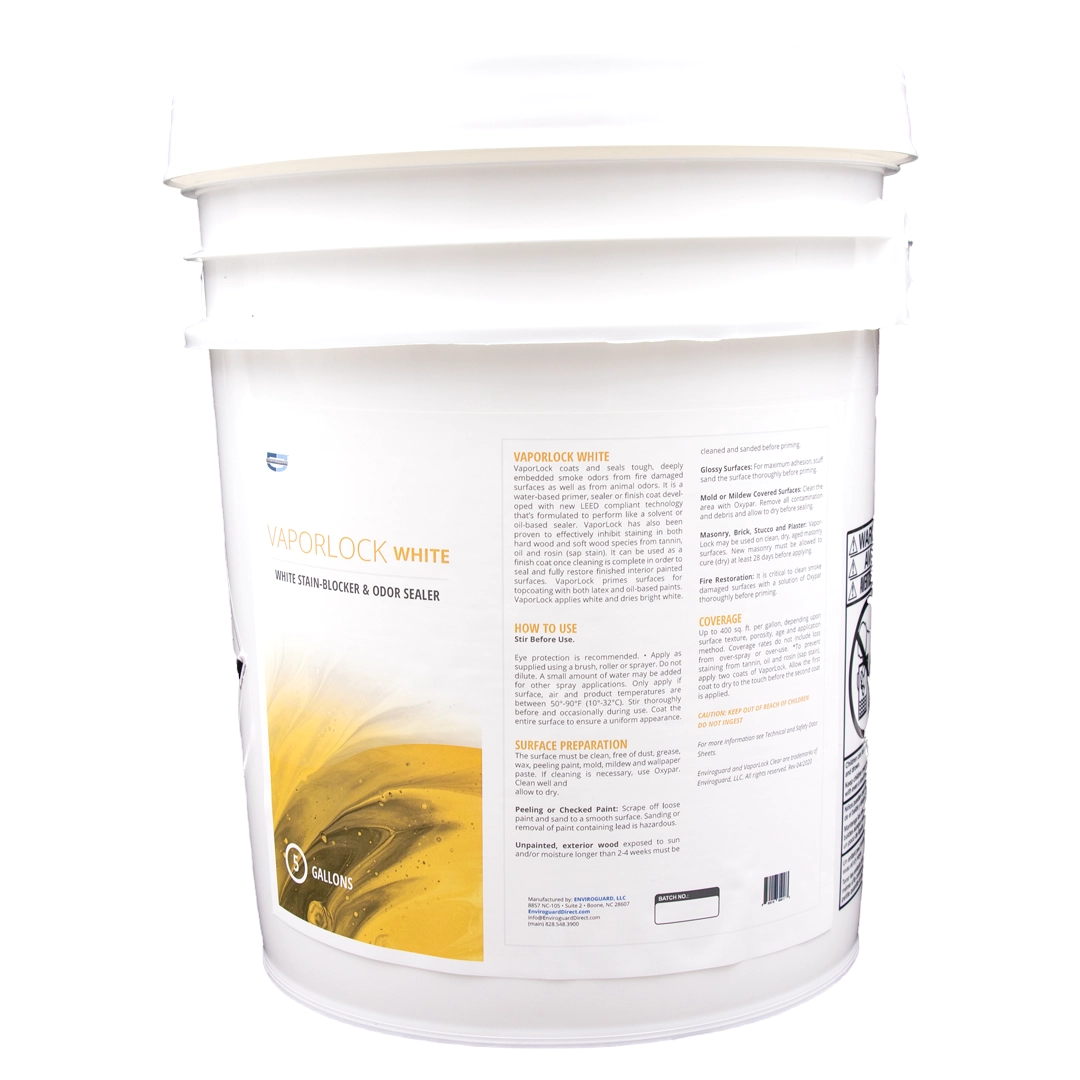
VaporLock
Clear goes on exposed joists, framing, subflooring and sheathing. White is a primer and odor sealer in one for walls and ceilings.
Shop VaporLock →The Creepy Crawlspace
You pull the access panel, shine a light on the joists, and the underside of the subfloor is black and fuzzy. The homeowner called about a musty smell in the hallway.
Crawlspaces hold humid air against cool wood, and nothing moves it out. Find the water before you treat anything. The usual suspects are a torn or missing vapor barrier, a downspout dumping against the foundation, and vents pulling in summer air. Fix that first, or the growth has the same conditions it had before.
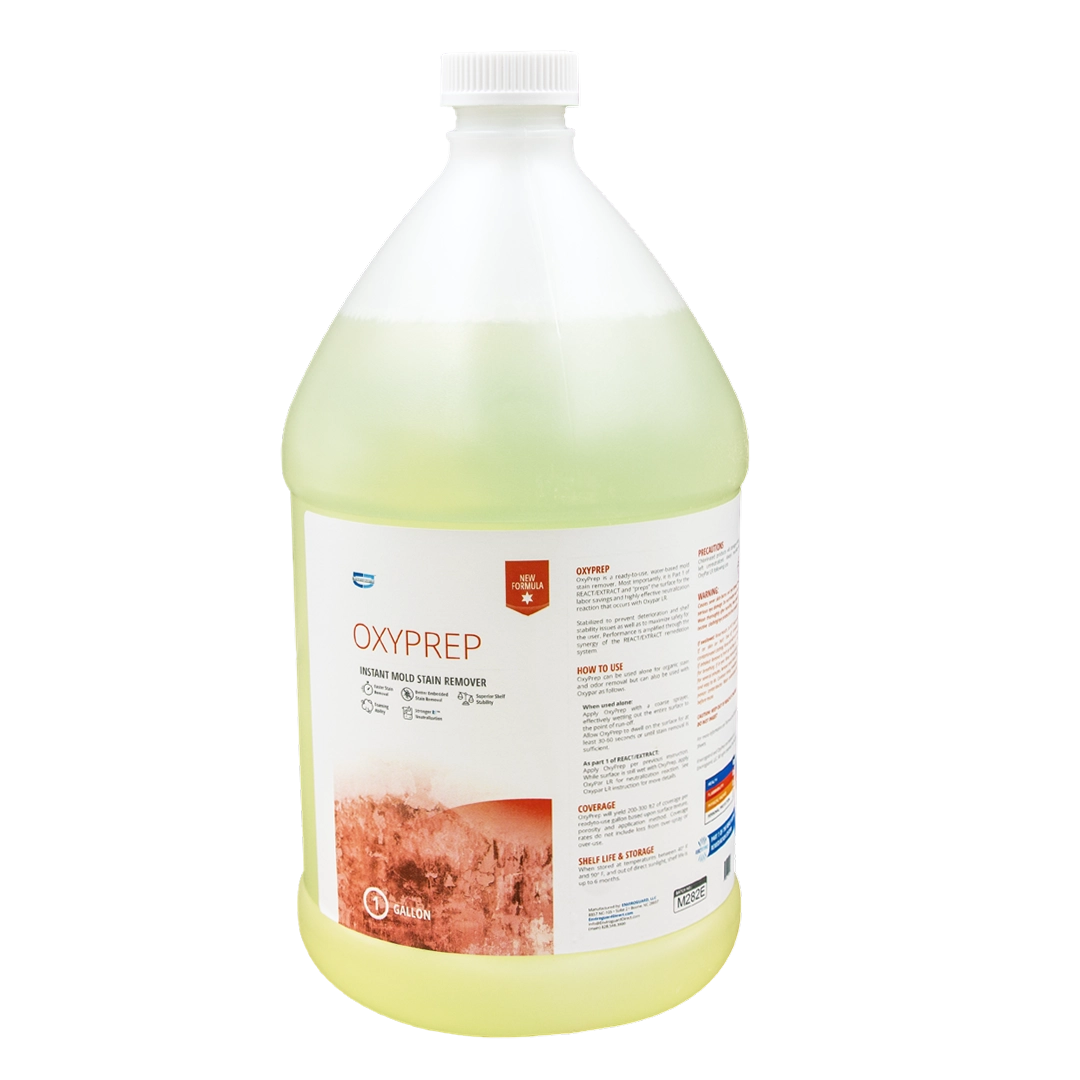
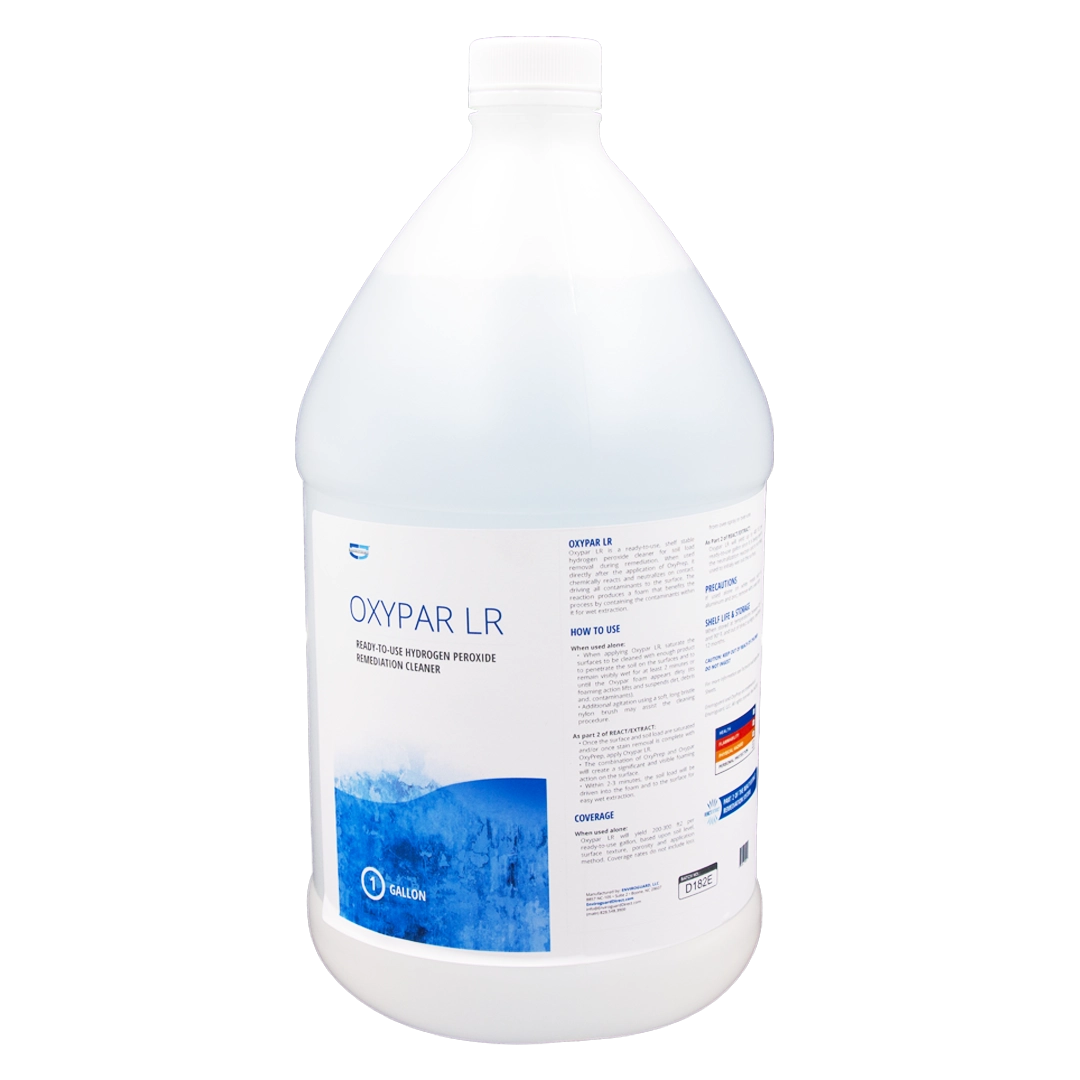
On the wood we run REACT|EXTRACT, our two product sequence for mold and mold staining. OxyPrep goes on first. It takes out the staining and leaves the surface alkaline. OxyPar LR follows, scrubbing the growth loose and holding it in suspension so you can extract it instead of leaving it in the grain. The REACT|EXTRACT™ page has the full breakdown.
Once the wood is clean and dry, encapsulate it with MaxGuard. Encapsulating means coating the wood so it's sealed against moisture and new growth. Pick the color that fits your needs.

Sewage in a Finished Basement
Water damage is sorted into three categories by how contaminated the water is. Category 1 is clean water, like a supply line break. Category 2 has some contamination, like a washing machine overflow. Category 3 is grossly contaminated, and sewage falls here.
With Category 3, porous materials the water touched come out. That's carpet, pad, drywall and insulation. You don't try to dry contaminated drywall. What's left is framing and hard surfaces, and here's how each gets handled.
| Material | What happens to it | How we treat what stays |
|---|---|---|
| Carpet, pad and other soft goods | Removed and discarded. | No product protocol applies. |
| Drywall, insulation and framing | All affected drywall and insulation come out, leaving the framing exposed. | CleanZyme, OxyPar LR, a Dutrion Tablet solution, then Fortify on the framing. |
| Non porous hard surfaces | Metal, sealed surfaces and fixtures stay and get cleaned. | CleanZyme, OxyPar LR, then a Dutrion Tablet solution. |
| Hardwood, tile and concrete | Decontaminated at the surface. Removed only if structurally compromised. | CleanZyme, OxyPar LR, then a Dutrion Tablet solution. |
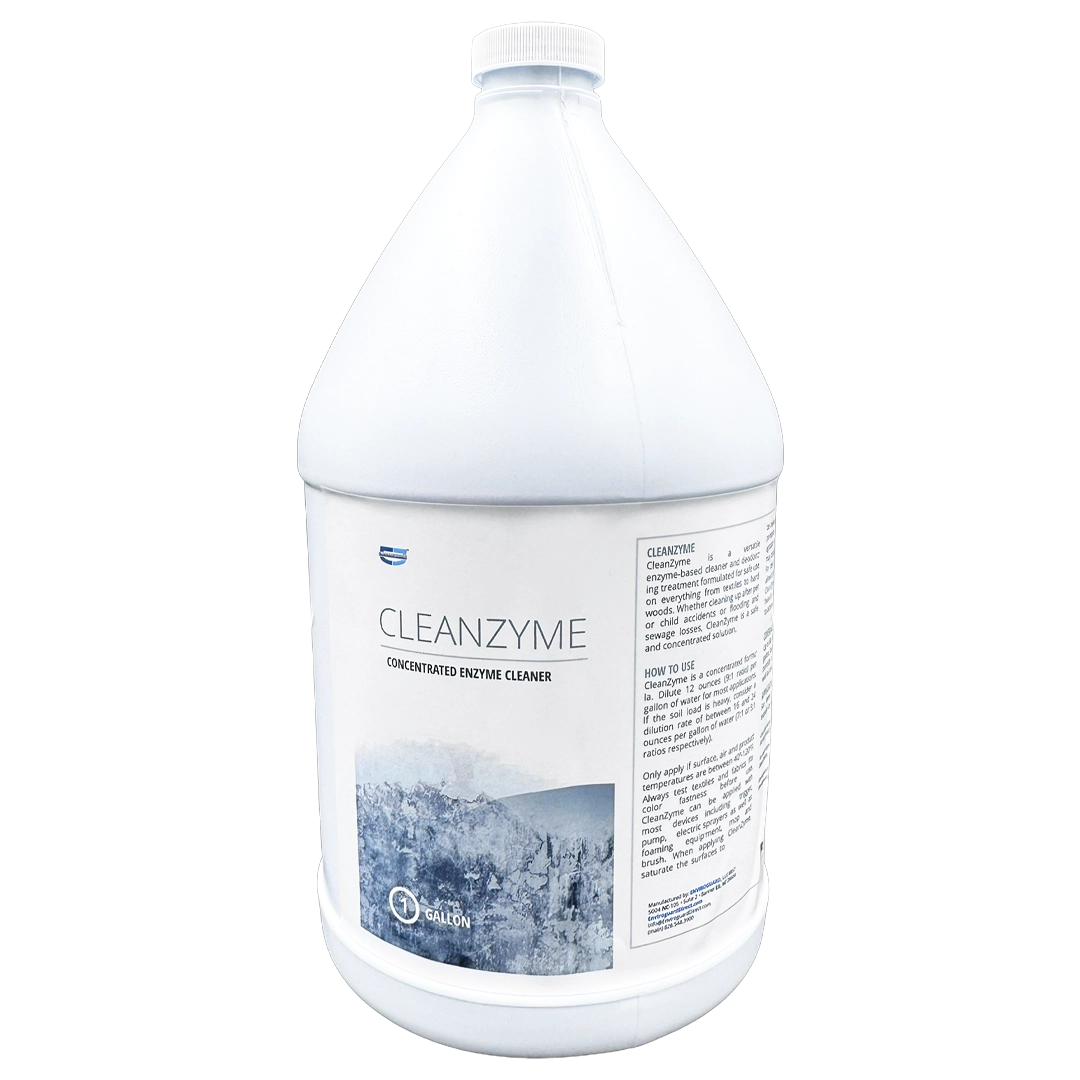
CleanZyme is an enzyme pretreatment. It breaks down the organic soiling so the next product can reach the surface. OxyPar LR does the oxidative cleaning. Dutrion Tablets dissolve in water into a chlorine dioxide solution for sanitizing and deodorizing, fogged or sprayed, with a 1 minute dwell (how long it sits on the surface). Fortify goes on the framing last as a durable microbial inhibitor before the walls close back up.
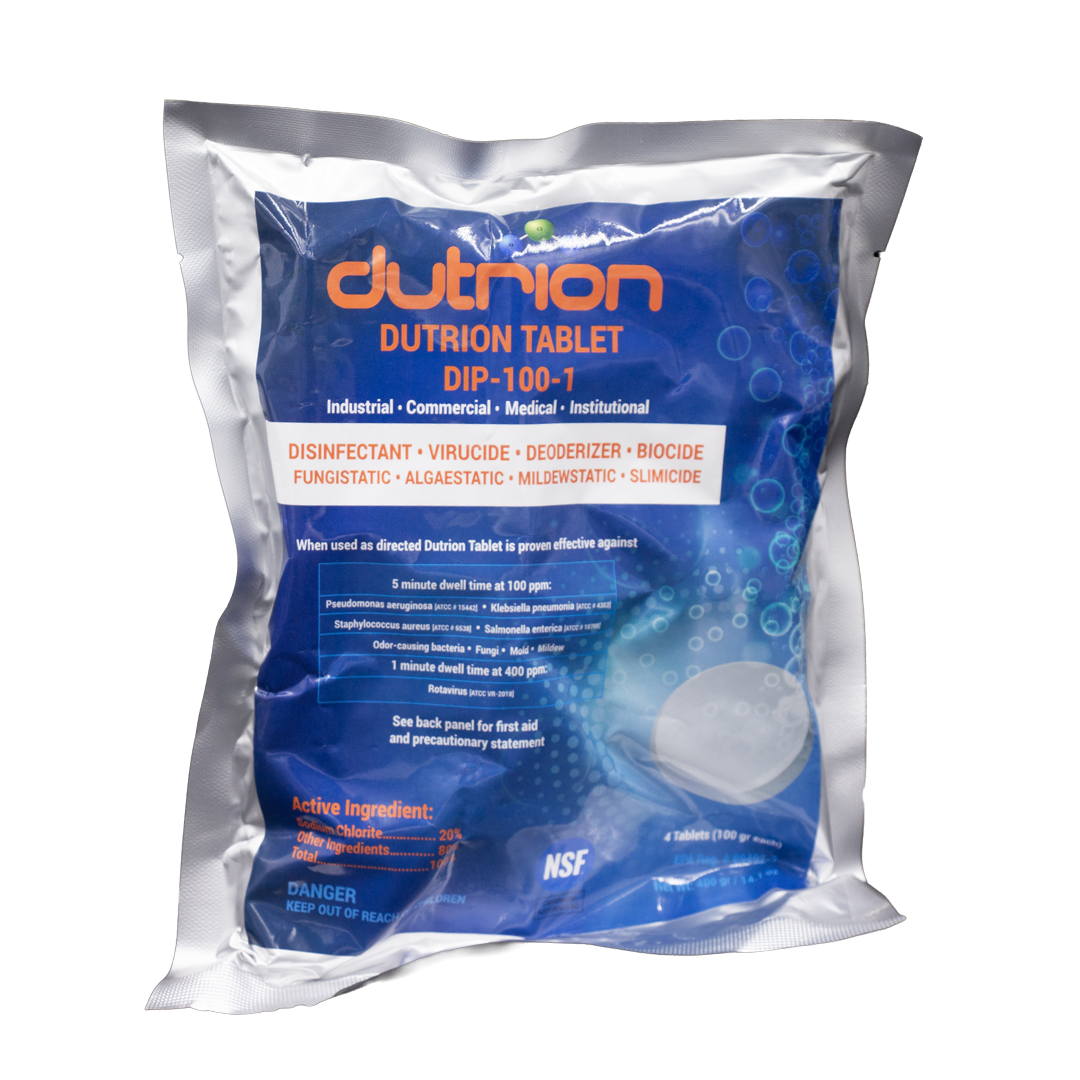
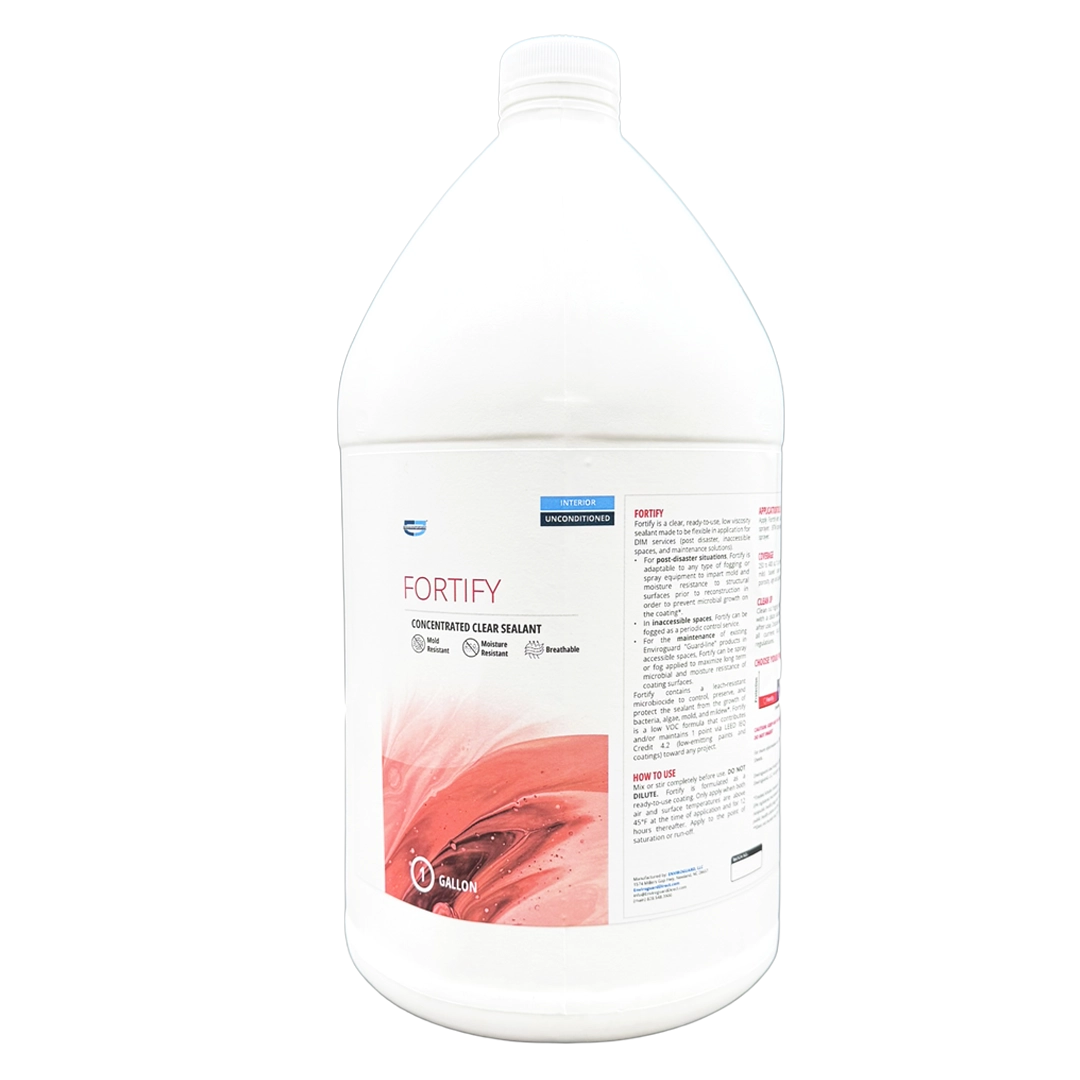
Category 3 water carries bacteria and other pathogens. Wear full PPE for the whole job, demolition included, and keep the occupants out of the area until the work is done.
The Ghost That Keeps Coming Back
White powder on the basement wall
You brush it off in the spring. By fall, boo, it's back in the same spots. That chalky white deposit is efflorescence. Water moves through the concrete or block, picks up minerals inside the wall, and leaves them on the face when it evaporates. It isn't mold and it doesn't damage the wall by itself, but it does mean water is moving through the masonry.
The fix is three products in order. NeatCrete is a mild acid cleaner that dissolves the deposit. Rinse well with plenty of water. pHaragent then neutralizes the wall, bringing it back up from acidic to a normal range. Rinse again. EnviroSeal goes on last. It soaks into the concrete, reacts with it and densifies the surface, closing off the small channels the water was using, and it's made to stop efflorescence from forming again.
While you're at it, walk around outside. Downspouts emptying right next to the house and soil sloping toward the wall are the most common reasons a basement wall stays damp, and both are usually cheap to fix.
Never mix NeatCrete and pHaragent. One is an acid and the other is an alkali. Mixed in a closed jug or sprayer they build pressure. Use separate containers and rinse between them.
Keep acid away from bleach. If bleach has been used on that wall or is stored nearby, rinse the wall and move the bleach out before NeatCrete comes into the room. Acid and bleach together give off chlorine gas.
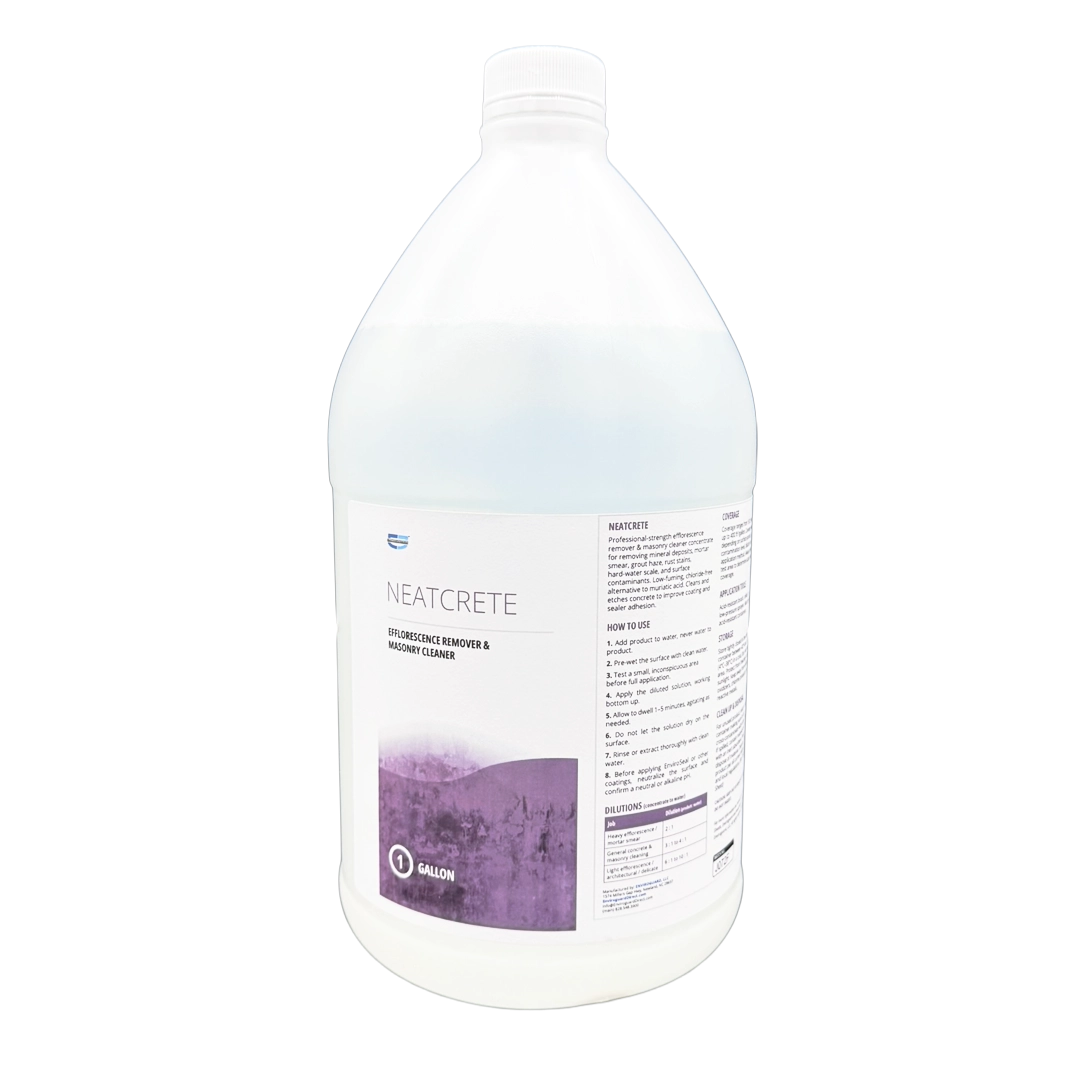
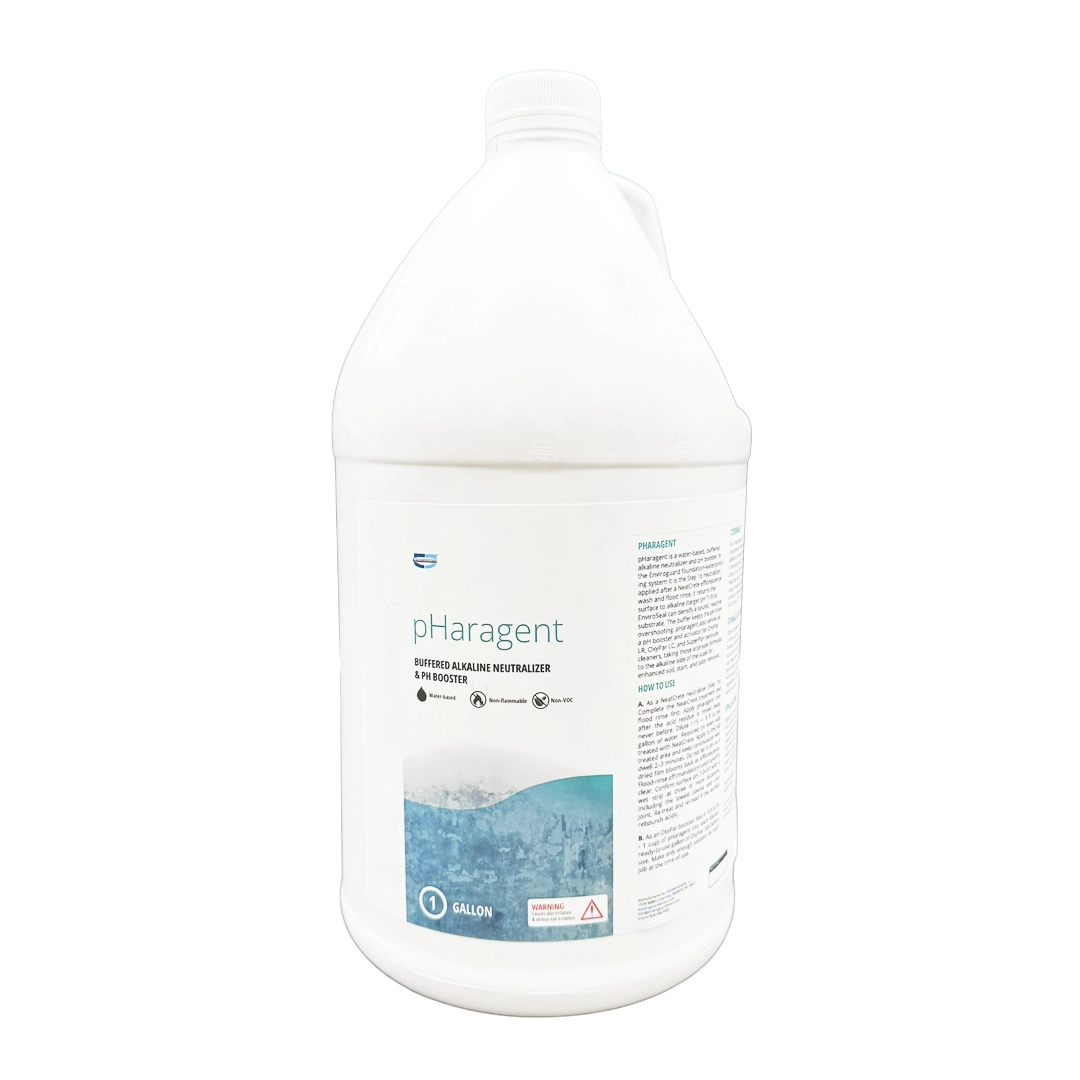

If water is running in, pooling on the floor or coming through cracks, you're past efflorescence. Get a waterproofing contractor to look at it before you treat the surface.
Skunk Under the Porch
Something wicked smells this way comes
The skunk is gone, but the smell still drifts in every evening. If it's still living under there, call a wildlife pro first.
The smell comes from thiols, sulfur compounds you can't wash away. Skunk spray also leaves thioacetates that turn into new thiols when they get damp, which is why the smell comes back on humid nights.
OxyPar LR
A peroxide oxidizer that turns thiols into odorless compounds and deactivates the thioacetates. Cover the whole area that got hit, not just the spot you can see.
Shop OxyPar LR →Dutrion
Chlorine dioxide gas reaches what the liquid can't, like wall cavities, ductwork and the space under the subfloor. Keep the area sealed while it works.
Shop Dutrion →VaporLock
Seals the treated wood, concrete and subfloor so anything left below has no way back into the air.
Shop VaporLock →Keep people and pets out while the Dutrion gas works, and follow the label for when it's OK to go back in. Rather not handle the gas yourself? A remediation contractor can do all three steps.
Got a Job That Feels Spooky?
Pick the problem in Find My Fix and it shows you which products to use and in what order. Mold, odor, water damage, fire and smoke, and foundation waterproofing are all in there.
Find My Fix