

Seal the odor into the surface, permanently.
When odor is embedded in a material, more air treatment won't reach it. VaporLock is a water-based coating built to block it at the source: a vinyl resin fine enough to actually seal odor molecules, flexible enough to stay sealed for the long haul, and safe enough to work with indoors.
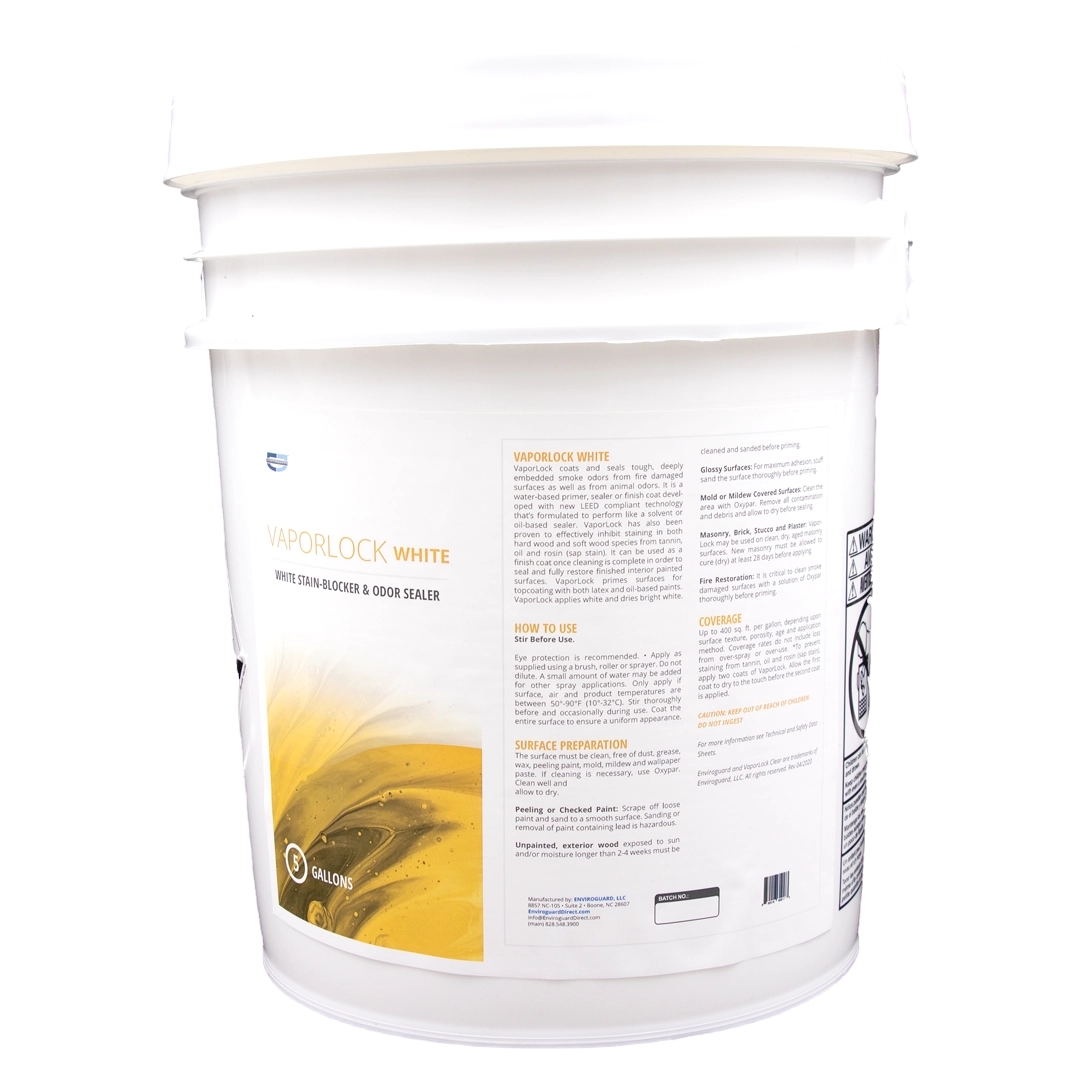
VaporLock, ready to ship.
Supplied through the professional contractor channel. Pick the finish your job calls for and size coverage from your surface area.
Shop VaporLockThe odor you can't clean out
Smoke, pet, nicotine, sewage and decomposition odors don't just hang in the air. The molecules penetrate drywall, framing, subfloor and insulation and settle in. Clean the surface and the air, and it smells fixed. Then temperature and humidity shift, the material breathes the odor back out, and the complaint returns. That's the callback. Sealing is what stops it.
Odor soaks in
Odor is molecular. It absorbs into porous building materials and sits below the surface, out of reach of cleaning and air treatment.
The material off-gasses
As conditions change, the surface slowly releases what it absorbed. The smell that seemed gone comes back days or weeks later.
A barrier it can't cross
VaporLock coats the surface with a film too fine for odor molecules to pass, so what's embedded stays embedded, for good.
Why particle size decides everything
To block an odor molecule, the coating's resin particles have to be smaller than what they're sealing in, under 0.01 microns. Most "odor sealers" aren't close. This is where VaporLock's vinyl chemistry separates from the pack.
Resin particle size, compared
Smaller is better for odor sealing: the finer the resin, the tighter the film and the less that can escape through it.
The resin seals the molecule
Odor blocking is a size game. Only a resin smaller than the odor particle can form a film it can't slip through, and VaporLock's vinyl clears that bar with room to spare.
It stays sealed instead of cracking
Built with plasticizers, the film elongates as surfaces expand and contract. Shellac goes brittle and develops hairline fractures over time, and every crack is a path for odor to escape again.
Two finishes, and a coating you can actually work with
VaporLock comes in Clear and White for different jobs, and unlike oil and shellac sealers, it's water-based, so applying it doesn't mean fighting solvent fumes or a difficult cleanup.
Clear
For surfaces meant to stay visible, such as attics and exposed framing, or to rescue odor-damaged painted surfaces by top-coating them instead of priming and repainting.
White
For covering staining and priming while odor-sealing in one pass. Tintable, so it color-matches into the surrounding finish.
Built to be worked with. Water-based means it cleans up with soap and water and stays fume-free, with no solvent smell to battle while you apply it.
Odor sources it seals:
After the cleanup, before the rebuild
VaporLock goes on once the affected area is cleaned and prepped, sealing the structural surfaces that hold odor before they're closed back up. It's the step that turns "smells better today" into "stays fixed."
Framing & structural wood
Studs, joists and sheathing that absorbed odor during a fire, flood, infestation or decomposition event.
Drywall & subfloor
Porous surfaces staying in place through the rebuild, sealed so they can't re-release odor behind new finishes.
Attics & exposed surfaces
Use Clear where the surface stays visible, so the seal doesn't change the look of the space.
Odor-damaged painted surfaces
Top-coat with Clear to salvage a wall or ceiling instead of stripping, priming and repainting from scratch.
Find a Pro near you
VaporLock is applied as part of professional remediation. Connect with an Enviroguard Certified Firm trained on the system to handle the job.
Find a ProShop & size the job
VaporLock is supplied through our professional contractor channel. Shop the product and size coverage from your surface area with the Job Estimator.
Before you seal
How is VaporLock different from a shellac sealer?
Clear or White, which do I use?
Do I still need to clean first?
Is it safe to use indoors?
How does it fit with Zeolair?
What VaporLock does, and how to state it
VaporLock is an odor-sealing coating. Its job is to block embedded odor from escaping a surface, using a vinyl resin fine enough to seal odor molecules and flexible enough to stay sealed. It contains an EPA-registered antimicrobial additive that protects the coating film and supports use in unconditioned areas during reconstruction.
Read the label for regulated claims. The antimicrobial is a formulation additive; any antimicrobial use is governed by the product's EPA-registered label. VaporLock's core function is odor sealing, so confirm ppm-level or public-health claims against the label before making them.
Seal it once. Done for good.
Lock embedded odor into the surface so it can't come back, then keep the air fresh with Zeolair.