

Restore the roof. Keep your options open.
Phoenix elastomeric coatings rebuild a sound low-slope roof into a seamless, reflective membrane, for a fraction of tear-off cost, and without locking you into one chemistry for the life of the building.
Installed cost, per square foot
A sound roof is an asset, not scrap.
When the deck and insulation are dry and structurally sound, tearing the whole assembly off sends a working roof to the landfill. Restoration treats what you already own as the substrate and adds decades of seamless, reflective protection on top.
Lower installed cost
Restoration typically runs roughly half to a third of full replacement, because there's no tear-off, disposal, or new membrane and insulation.
No tear-off, no shutdown
Work happens over the top of the existing roof, so operations below continue and there's far less debris and disposal.
Seamless and reflective
A fluid-applied membrane cures into one continuous surface with no seams to fail, and a bright white finish that cuts rooftop heat gain.
Repairable and renewable
Elastomeric bonds to itself. Spot repairs and future recoats go straight over a cleaned surface, with no strip-out required.
Less landfill waste
Reusing the existing assembly keeps tons of old membrane and wet insulation out of the waste stream on every job.
This is what a restoration looks like.
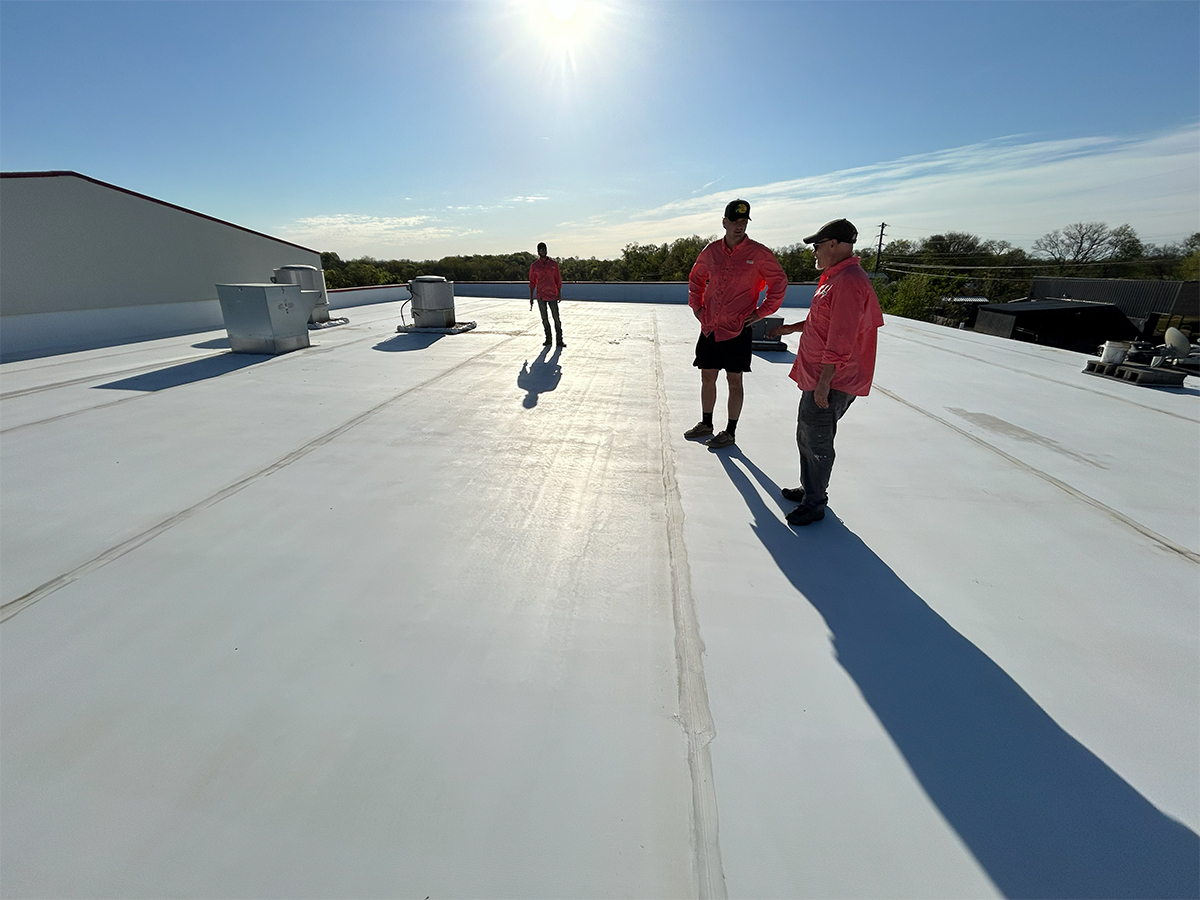
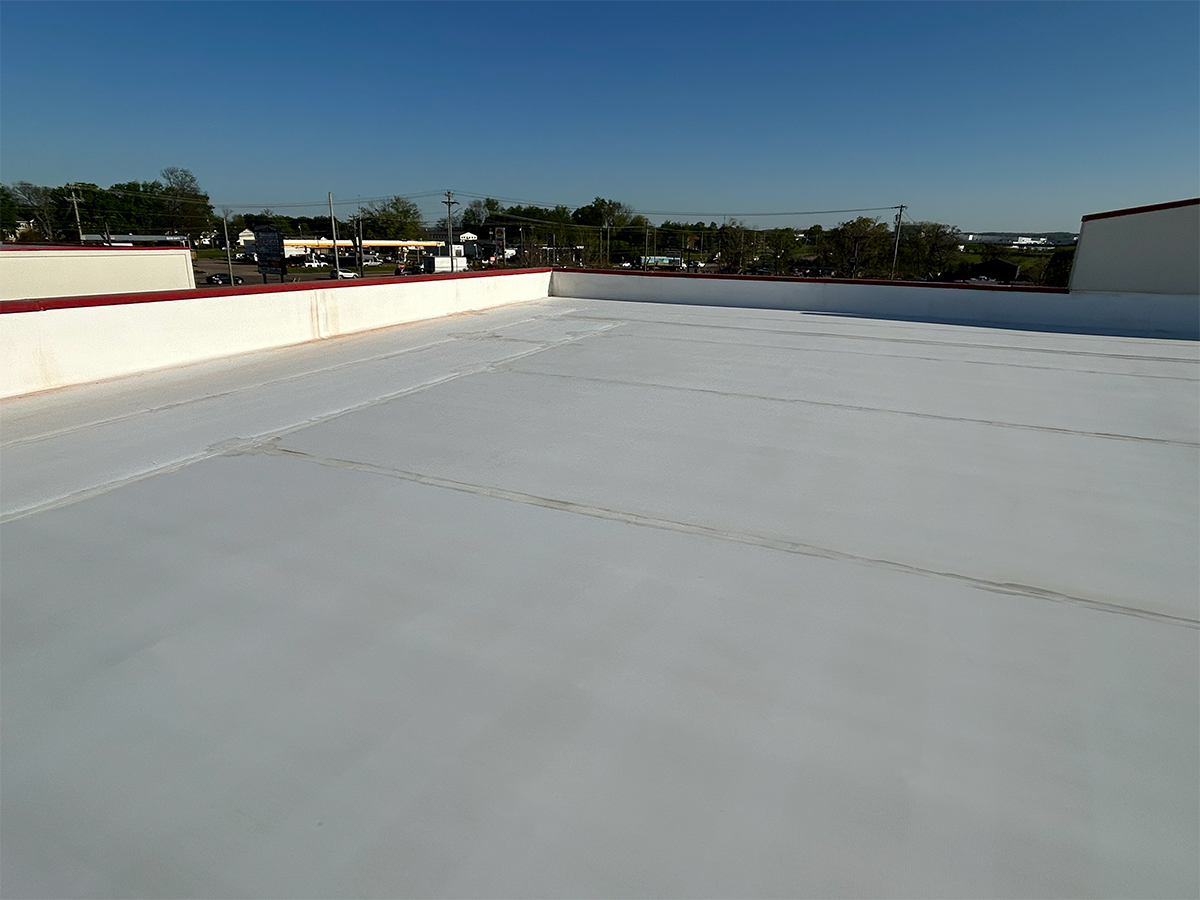

A low-slope commercial roof in Columbia, TN, restored to a seamless, reflective membrane and detailed by hand at every seam, with no tear-off. Restoration by Volunteer Seamless Systems.
Restore what's sound, or tear off what isn't.
When a low-slope roof reaches mid-life, the honest question is simple: is the roof sound enough to restore, or has it failed and need replacing? The difference is what each path costs you today, and what it costs you the next time the roof needs attention.
Phoenix Restoration
- Repairable: bonds to itself for spot repairs and recoats
- No tear-off when the substrate is dry and sound
- Reflective white membrane for cool-roof energy savings
- Renewable: recoat at end of service life to reset the clock
Tear-Off and Replace
- Necessary when insulation is widely wet or the deck has failed
- Longest service life on a brand-new assembly
- Highest cost: materials, tear-off, disposal, downtime
- Old materials removed first to avoid trapping moisture
When restoration is not the answer, and we'll tell you
A coating restores a sound roof; it does not rescue a failed one. Coating over trapped moisture seals water into the assembly, where it keeps degrading the deck and eventually blisters the new membrane off. That's why a qualifying roof has to pass a real inspection first.
- Deck and insulation are dry and structurally sound
- Roughly mid-life, worn at the surface, not systemically failed
- Leaks already found, fixed, and dried before coating
- Drainage that clears water within about 48 hours
- Moisture surveys show wet insulation across roughly 25% or more of the roof
- The deck is soft, deflected, corroded, or delaminated
- Repairs alone would approach the cost of replacement
- The membrane has separated from the deck over large areas
Wet or failed areas are always cut out and replaced with dry, sound material before any Phoenix coat is applied. Restoration skips the full tear-off, not the honest prep.

Phoenix WhiteCap elastomeric coating.
The fluid-applied system that becomes your new roof: a base coat and reflective top coat that cure into one seamless, renewable membrane.
Restoring an oxidized metal roof.
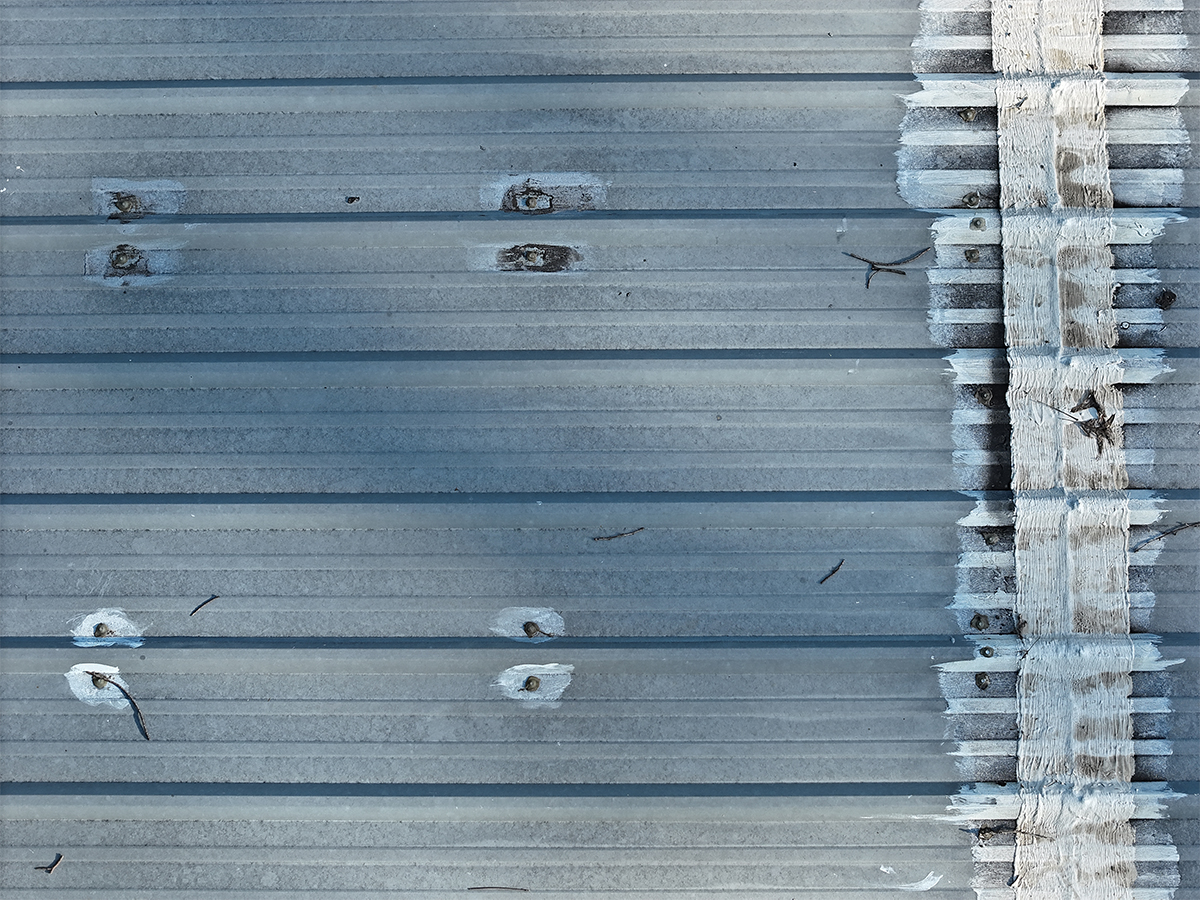
An exposed-fastener metal roof doesn't have to be torn off to stop leaking. The failure points are predictable: chalked panels, rusted fasteners, and seams that have been patched again and again. A Phoenix system seals all of them at once into one continuous, reflective membrane, for a fraction of a tear-off.


The failure points we start with
On a through-fastened metal roof, the leaks come from the screws and seams, exactly what a coating system is built to seal. Here's where water gets in, and how a Phoenix membrane closes every path at once.
The honest fit for metal
Restoration works when the metal is structurally sound and the deck beneath is dry. Oxidation, worn fasteners, and tired seams are exactly what a coating renews. If panels are rusted through, the structure is compromised, or moisture has gotten into the assembly, that's a replacement, and we'll say so. For the far more common oxidized-but-sound metal roof, coating rescues what you have instead of scrapping it.

A sound roof, reflective again, without a single square foot torn off.
How a Phoenix restoration goes on.
This low-slope commercial roof came to us as a failing TPO system, leaking at split seams, with several points where water was getting into the building envelope. Rather than tear it off, we restored it in place with the Phoenix WhiteCap system. Here's the real sequence, start to finish.
Seal every seam first
The red Fastener and Seam Sealer is applied to all TPO seams to reinforce them, closing the split seams that were the roof's main leak paths before anything else goes down.
Fastener and Seam Sealer
Detail the penetrations
Curbs and penetrations are where roofs leak most. Each one is seamed with waterproofing tape, then tied seamlessly into the roof-deck TPO, eliminating the paths water uses to get into the envelope.
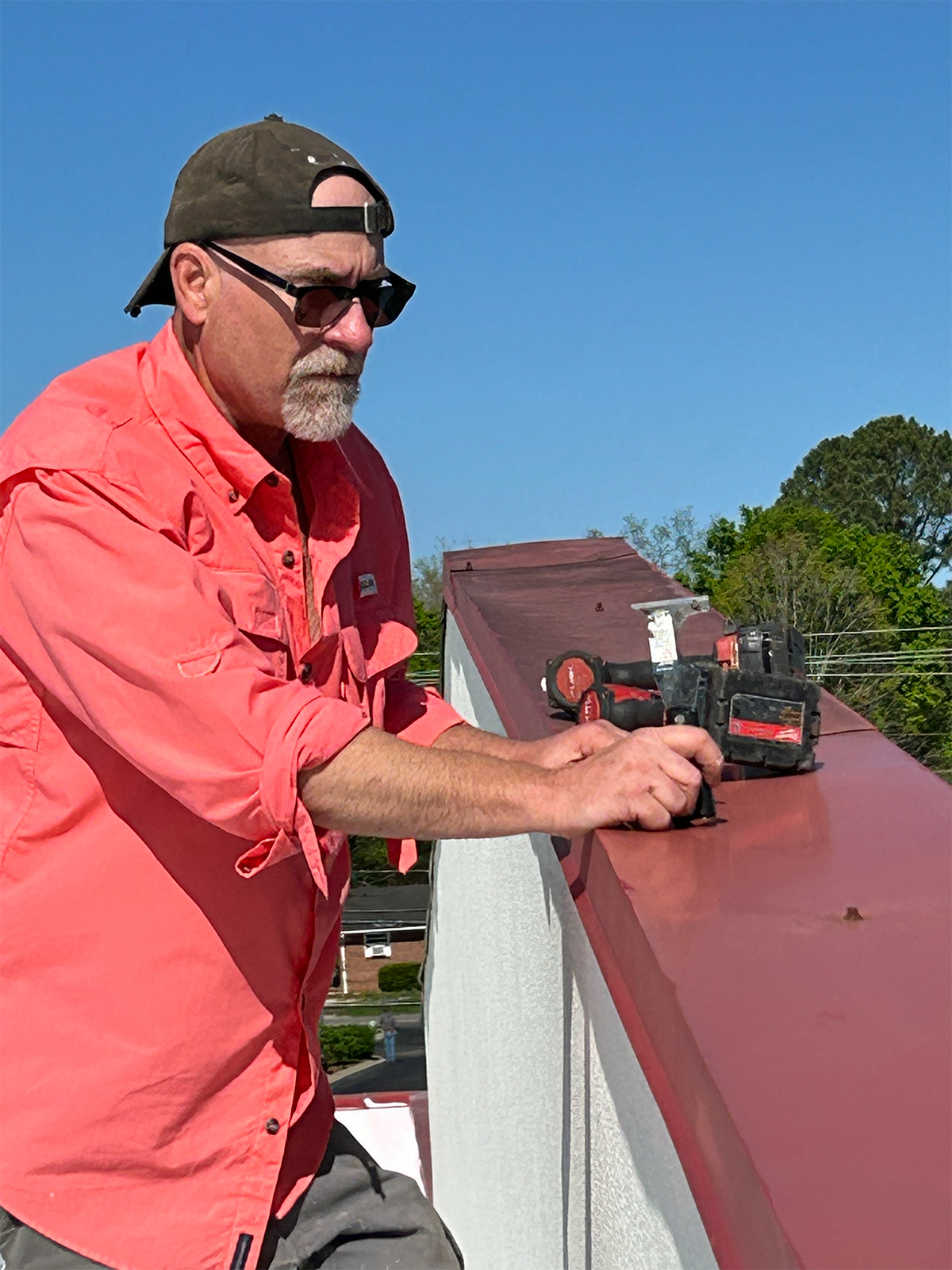
Prep the terminations
Parapet tops and wall terminations are detailed by hand. Here, Keith of Volunteer Seamless Systems preps a parapet so the membrane ties off cleanly at every edge.

Spray the base coat
With every seam and penetration sealed, the WhiteCap Base Coat is spray-applied across the whole roof, building the first monolithic layer of the new membrane over the prepared TPO.
WhiteCap Base CoatTop it with WhiteCap
The white WhiteCap Top Coat goes on over the blue base. You can watch the color change as the finish coat covers it. This is the reflective, seamless surface the building lives under.
WhiteCap Top CoatOne seamless, reflective roof
What was a leaking TPO roof is now a single continuous Phoenix membrane. No seams to split, no tear-off, and a bright reflective surface that can be renewed with a recoat years down the road.
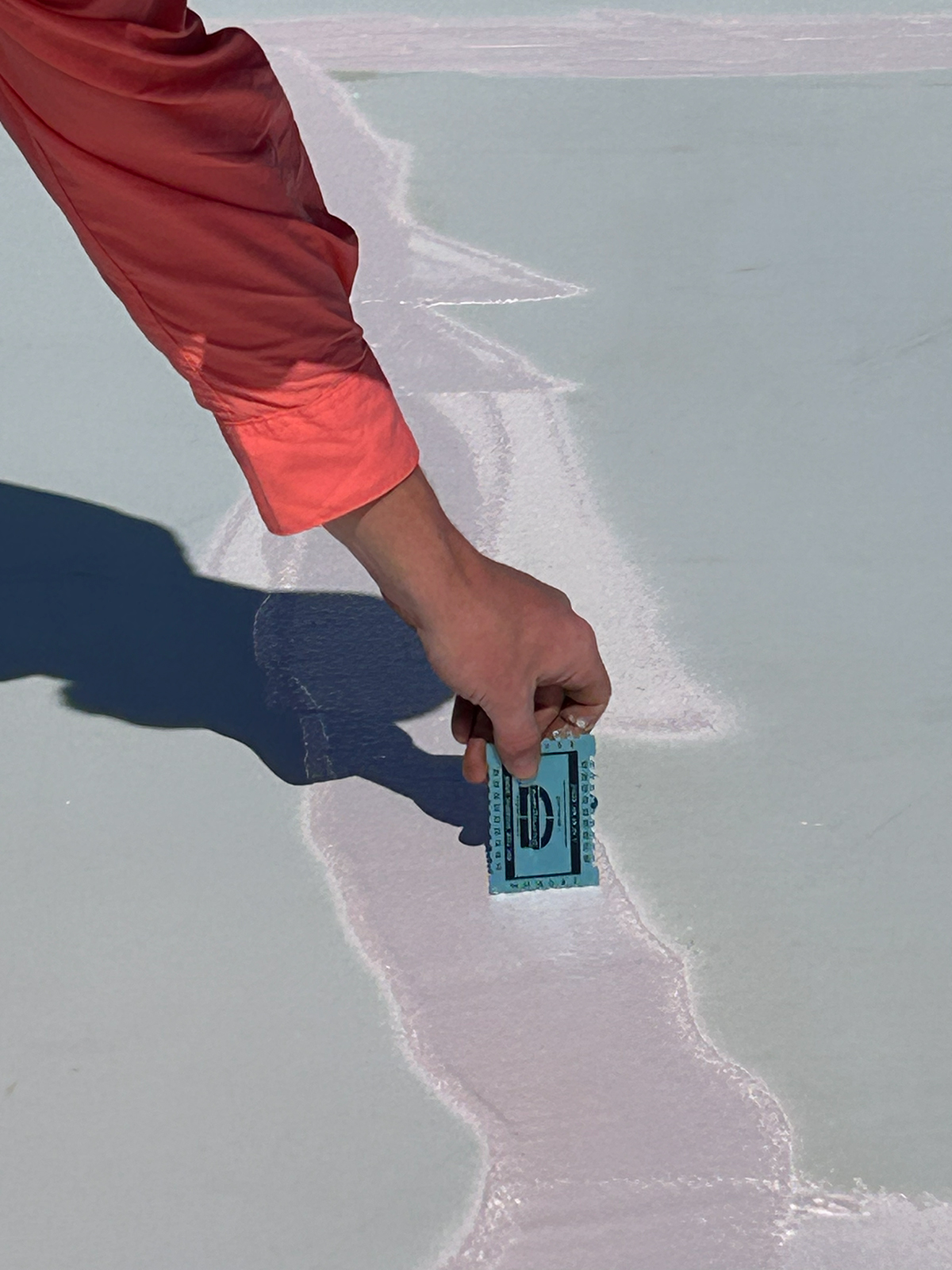
Warranty length tracks dry-film thickness. Hitting the manufacturer-specified mil thickness across both the base and top coats is what separates a long-lived system from an early failure, so the finished thickness is measured, not estimated.
Which path fits the roof in front of you?
Specify by roof condition, drainage, and how much future flexibility the owner wants to keep.
Restore
The deck and insulation are dry and sound, drainage clears within about 48 hours, and the owner wants lower cost now plus the freedom to repair and recoat later without chemistry lock-in.
Fix the drainage first
Standing water is a drainage condition, not a reason to skip restoration. Correct the slope with tapered insulation or added drains so the roof sheds water, then a Phoenix system goes on a roof that drains, and the owner keeps every future option open.
Tear off
Moisture surveys show wet insulation across roughly a quarter or more of the roof, the deck is compromised, or repairs would approach replacement cost. At that point a new assembly is the sound investment.
Want the full technical comparison?
See Phoenix measured head-to-head against silicone and full replacement, with cost breakdowns, the honest downsides of every system, and the questions we get most.
Find your path.
See if your roof qualifies to be restored.
A short inspection tells you whether your roof is a restoration candidate or genuinely needs replacing, with an honest recommendation either way. Get connected to a certified Phoenix pro near you.
Find a certified proQuote all three paths in one visit.
Phoenix training and the job estimator scope the roof, price restoration against replacement to your margin, and hand you the honest talking points that win the bid. Available to Certified Firms.
Estimate a job