June's newsletter is out! ✉️

PPE GUIDE

When PPE
Stops Protecting You

There are many failures in PPE that go unnoticed. Your suit is intact, gloves aren’t torn, and your respirator is still secure, but the hazard has already permeated the system. In most cases, protection can be a countdown, not a wall.

July 6th, 202610 min read
Let’s Set the Scene

Your gloves are on, your suit is zipped, your cartridge is seated, and your mask is snug. Everything looks and feels right, so the job seems covered. An hour in, nothing hurts, nothing smells off, nothing looks wrong, but that doesn't always mean your PPE is appropriately protecting you. That's because the most common way PPE fails isn’t a rip or a tear you’d notice. It’s a chemical working its way through intact material at the molecular level, or a cartridge quietly filling to capacity, on a timer set by physics. The gear can be the correct gear, worn correctly, and still let the hazard through — silently, on a schedule. Learning to read that schedule is the whole job.

Almost every piece of PPE you own has a built-in time limit. The science of that limit is the difference between “I’m covered” and “I was covered twenty minutes ago.” Match the material to the hazard, respect the clock, and keep the seal — get any one of those wrong and good-looking gear will let you down.

The Stakes

Why "It Looks Fine" Isn't Good Enough

It’s easy to treat PPE as a checkbox: glove on, suit zipped, mask sealed, done. But the whole point of personal protective equipment is to manage an exposure you often can’t see, smell, or feel until it’s too late. Skin is a good defense against bulk liquids, but plenty of industrial and agricultural chemicals, solvents, pesticides, and more can cross it and absorb straight into the bloodstream with no warning sign. And the damage is usually cumulative, not dramatic: a little extra dose every shift, for years. The reality is that’s how a lot of occupational illnesses actually occur.

To use any of it correctly, you have to know how it fails. Safety pros separate PPE failure into three distinct mechanisms and only one of them is visible.

Failure ModeWhat’s HappeningCan You See It?What It Means For You
Degradation VisibleThe material physically breaks down — swelling, softening, cracking, dissolvingUsually, yesThe gear is warning you. Swap it out — it’s telling you the material and the chemical don’t mix.
Penetration MechanicalChemical flows through a gap — pinhole, failed seam, open zipper, glove cuff, mask leakSometimesThe fabric never failed; the coverage did. Fixed by fit, seams, and proper donning.
Permeation InvisibleChemical passes through intact material, one molecule at a timeNo — neverThe glove looks perfect and is failing anyway. This is the one that defeats good gear.
⚠ Field Note

Permeation is the one you have to plan for, not spot.

Degradation and penetration give you a chance to catch them — a glove gone gummy, a torn seam, a whiff of solvent. Permeation gives you nothing. There is no visual cue, no smell, no change in how the material feels. That’s why permeation isn’t managed by inspection, but by time. You don’t watch for it; you replace the gear before it can happen, based on the material’s tested breakthrough time for the chemical you’re handling.

Application — Hands

Gloves: Thickness is a Time Dial

This is the clearest place to see breakthrough science in action, and it’s exactly why one glove material comes in multiple thicknesses. Thickness is measured in mils (thousandths of an inch). More mils means a longer diffusion path — and a longer breakthrough time — but also less of your hand’s fine sensation getting through. Match the breakthrough time to your contact time, then pick the thinnest glove that still clears it.

Thickness isn’t a quality ranking where 15-mil is “better” than 4-mil — they’re different tools. A glove so thick you can’t feel the work invites slips and drops; one too thin breaks through mid-task. The right glove is the thinnest one that outlasts the job.

Application — Body

Suits: "Breathable" vs. "Barrier"
The Chemical Choice

The three nitrile thicknesses, and when to reach for each:

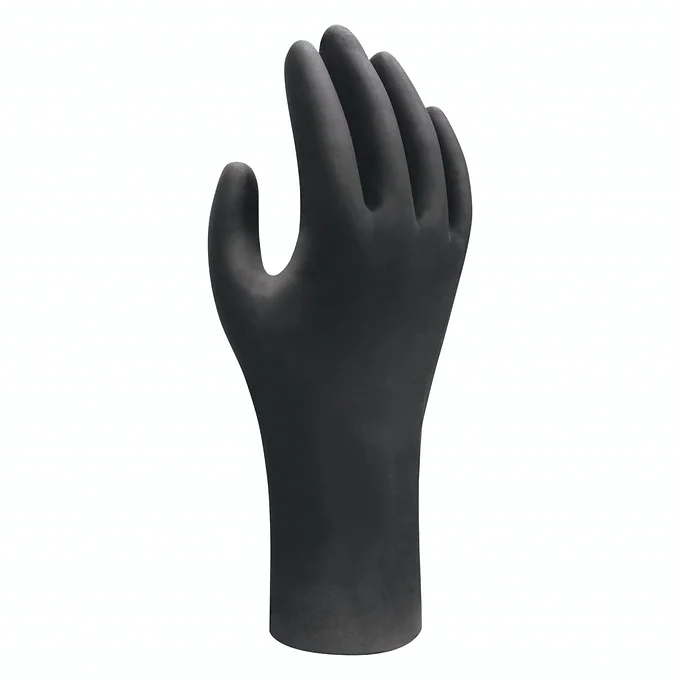
SHOWA 6112PF 4-mil single-use nitrile gloves
4-mil · Single-Use
SHOWA 6112PF

Use for: quick, incidental contact and splash where you need maximum feel — fine handling, sampling, frequent changes. Single-use: pull on a fresh pair rather than pushing past its short breakthrough.

Shop 6112PF ›
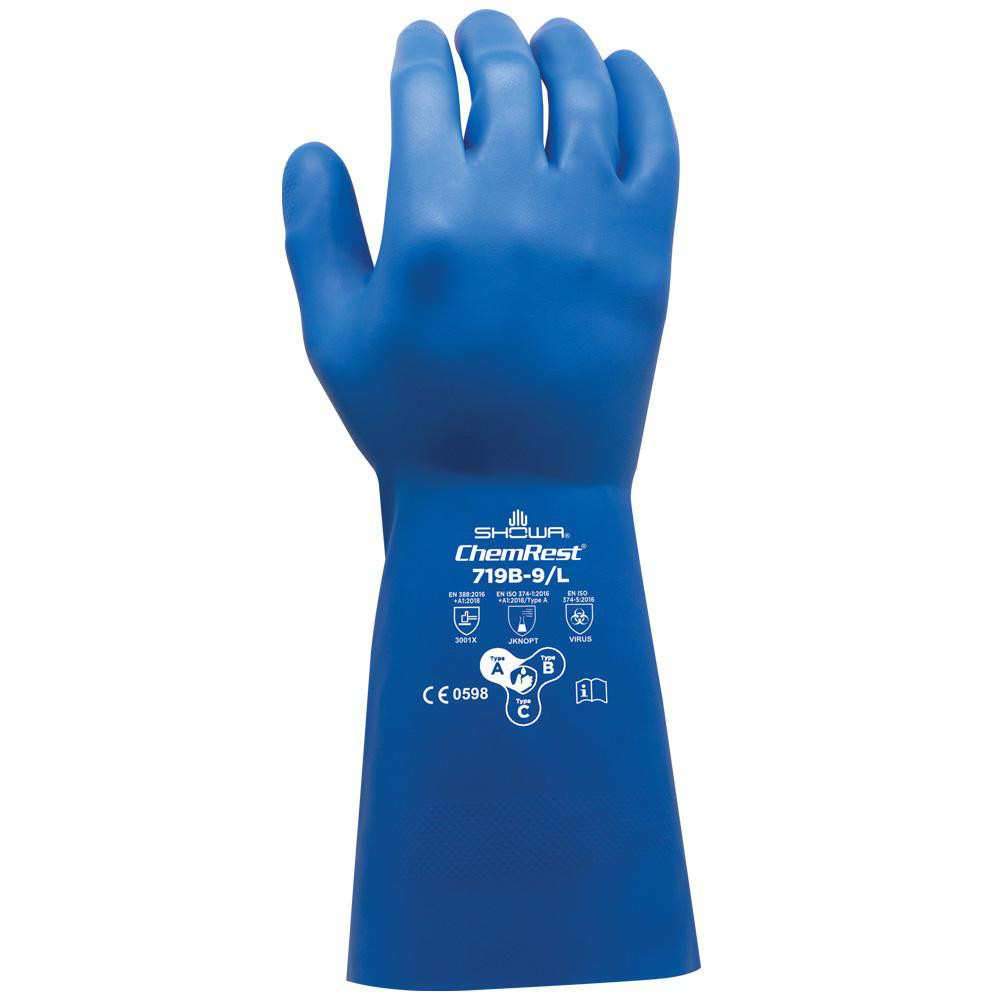
SHOWA 719B ChemRest 11-mil reusable nitrile gloves
11-mil · Reusable
SHOWA 719B ChemRest

Protect your hands with 11 mil nitrile chemical resistant gloves featuring a raised diamond grip for enhanced control. FDA approved and designed for comfort, these unsupported gloves are ideal for handling chemicals, cleaning, and industrial applications.

Shop 719B ›
SHOWA 730 ChemRest 15-mil reusable nitrile gloves
15-mil · Reusable
SHOWA 730 ChemRest

15 mil nitrile gloves designed for reliable chemical protection and excellent dexterity. These FDA approved, biodegradable gloves are ideal for general purpose chemical handling, cleaning, and maintenance tasks.

Shop 730 ›

Protective suits split into two families. Microporous fabrics have pores small enough to block dust and droplets but large enough to let sweat-vapor escape — breathable, great for particulate and light splash, but not built to stop aggressive liquids. Film-barrier suits use a continuous laminated film — no breathing pores — engineered and tested to resist chemical permeation. You don’t “upgrade” from one to the other; you match the suit to the hazard and the conditions.

From dry-particulate coveralls to sealed chemical barriers:

Polypropylene protective coverall with hood and boots
Particulate · Economy
Polypropylene Suit

Use for: dry, dusty, general dirty work and nuisance dust. Breathable and economical — a disposable layer that keeps dust and light debris off clothing and skin. Hood and boots for full coverage.

Shop Suit ›
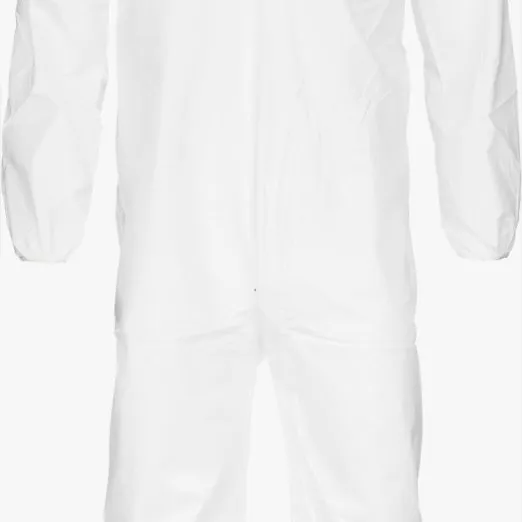
Lakeland MicroMax NS ANSI pattern microporous suit
Microporous · ANSI Cut
MicroMax NS (45g)

Use for: particulate plus light liquid splash where breathability matters. The ANSI pattern gives a roomier, less-tear-prone fit for full-shift mobility.

Shop Suit ›
Lakeland MicroMax Global 55 gram suit with boots
Microporous · With Boots
MicroMax Global 55

Use for: wet or dirty floors and standing-water cleanup. A heavier 55g microporous build with attached boots — particulate and splash protection plus foot coverage.

Shop Suit ›
Lakeland ChemMax 1 chemical protective suit
Film Barrier · Entry
ChemMax 1

Use for: light chemical splash and spray where a microporous suit would wet out. Your first real film barrier — genuine permeation resistance for lighter-duty chemical work.

Shop Suit ›
Lakeland ChemMax 2 chemical protective suit
Film Barrier · Heavy
ChemMax 2

Use for: tougher, more prolonged or aggressive chemical exposure. A higher barrier with sealed seams — reach for it when breakthrough resistance is the whole point of the suit.

Shop Suit ›
Film Barriers aren't risk-free

Sealing out chemicals also seals in body heat and sweat. A non-breathable barrier suit raises the risk of heat stress — its own genuine hazard on a hot day. That’s the real reason you don’t just “wear the strongest suit” for everything: you’d be trading a chemical risk you don’t have for a heat risk you do. Match the garment to the hazard and the conditions.

Application — Airways

Respirators: Filters Trap, Carts Fill Up

Air protection works by two different mechanisms. A particulate filter traps solid particles mechanically in a fiber web and loads up with debris over time, gradually making it harder to breathe through, which is your signal to change it. A gas & vapor cartridge uses activated carbon to adsorb vapor molecules onto a vast but finite internal surface; once that surface saturates, vapor breaks through — usually with no warning smell.

⚠ Field Note

A cartridge’s service life is not the number on the box.

Higher vapor concentration fills the carbon faster. Higher humidity competes for the same carbon sites and blunts capacity. Harder breathing during heavy work pulls more air through per minute. Because a saturating cartridge gives no warning smell, run a calculated change schedule — never “until I notice it.”

Build the respirator to the airborne hazard — facepiece, cartridge, and filter:

3M 6000 Series full face respirator mask
Facepiece · Full-Face
3M™ 6000 Full Face

Use when: you need eye + respiratory protection together, or you’re in higher concentrations and eye-irritant atmospheres. Reusable; accepts the cartridges and filters to the right. Fit-check the seal every time.

Shop Mask ›
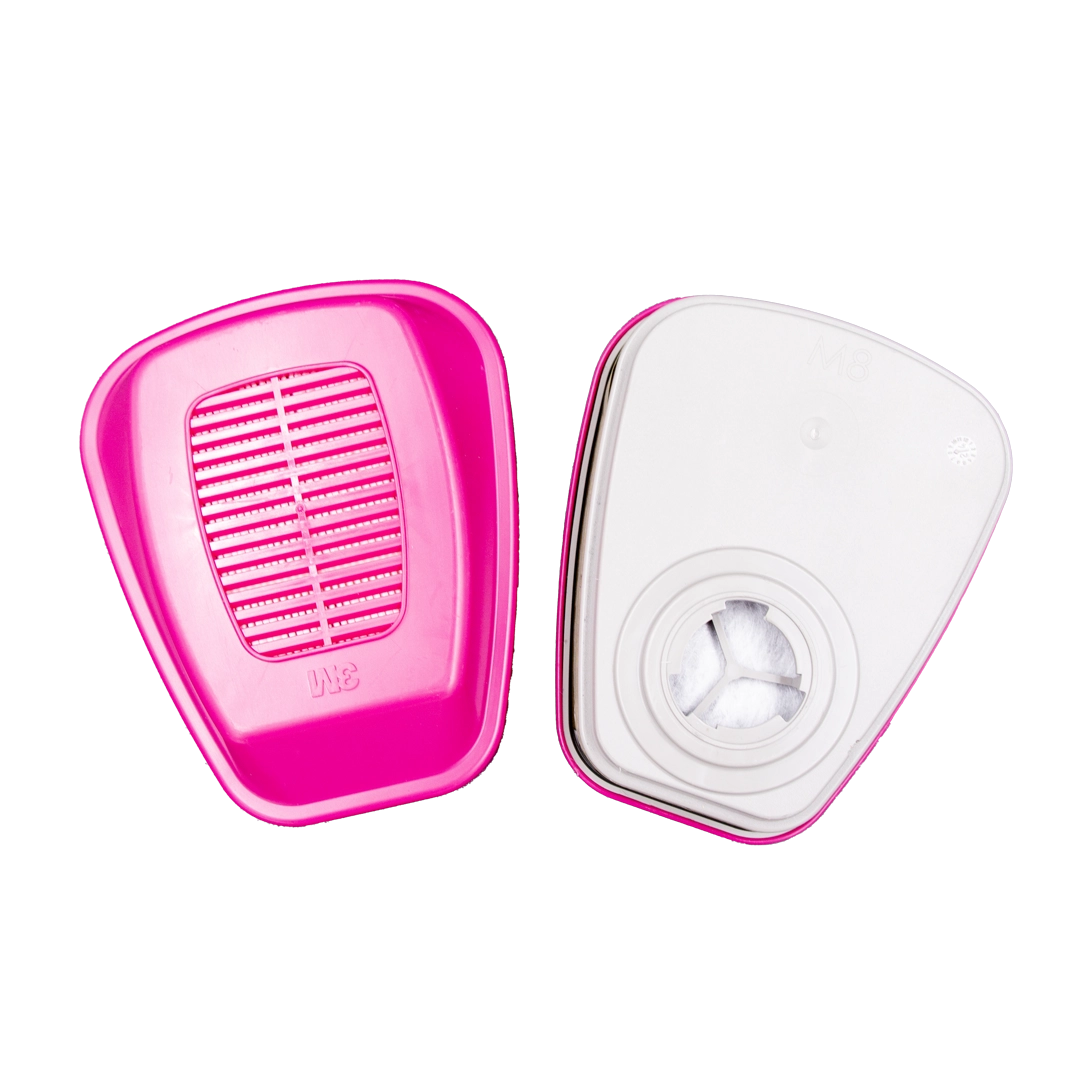
3M 60926 Multi Gas and Vapor cartridge with P100 filter
Cartridge · Gas/Vapor
3M™ 60926 Multi-Gas + P100

Use against: organic vapors, acid gases, ammonia and more — plus P100 particulate, all in one cartridge. Broad-spectrum protection; replace on a change schedule before breakthrough, not when you smell it.

Shop Cartridge ›
3M 7093B P100 particulate filter
Filter · P100
3M™ 7093B P100

Use for: particulate-only hazards — dusts, mists, and abrasive or mold work. Snap on when there’s no gas or vapor risk; change it out once breathing resistance climbs.

Shop Filter ›

None of this filtration matters if air sneaks around the mask. A respirator’s rated protection assumes a tight facepiece seal — which is why fit matters, why facial hair on the seal line breaks it, and why a fit check before each use is non-negotiable. That’s the airborne version of penetration: the filter never failed, the coverage did.

Application — The Seal

Close the Gaps

Remember penetration — the failure that’s about coverage, not material? It almost always happens at the interfaces: the wrist where glove meets sleeve, and the eyes when a half-mask leaves the face exposed. The best glove and the best suit still leave a gap between them. Two products close those gaps.

Stealth goggle with Hydroshield anti-fog coating
Eyes · Splash + Impact
Stealth Goggle w/ Hydroshield

Use with: a half-mask, or anytime you need sealed eye protection from splash, dust, and impact. The Hydroshield anti-fog coating keeps vision clear through temperature and humidity swings.

Shop Goggle ›
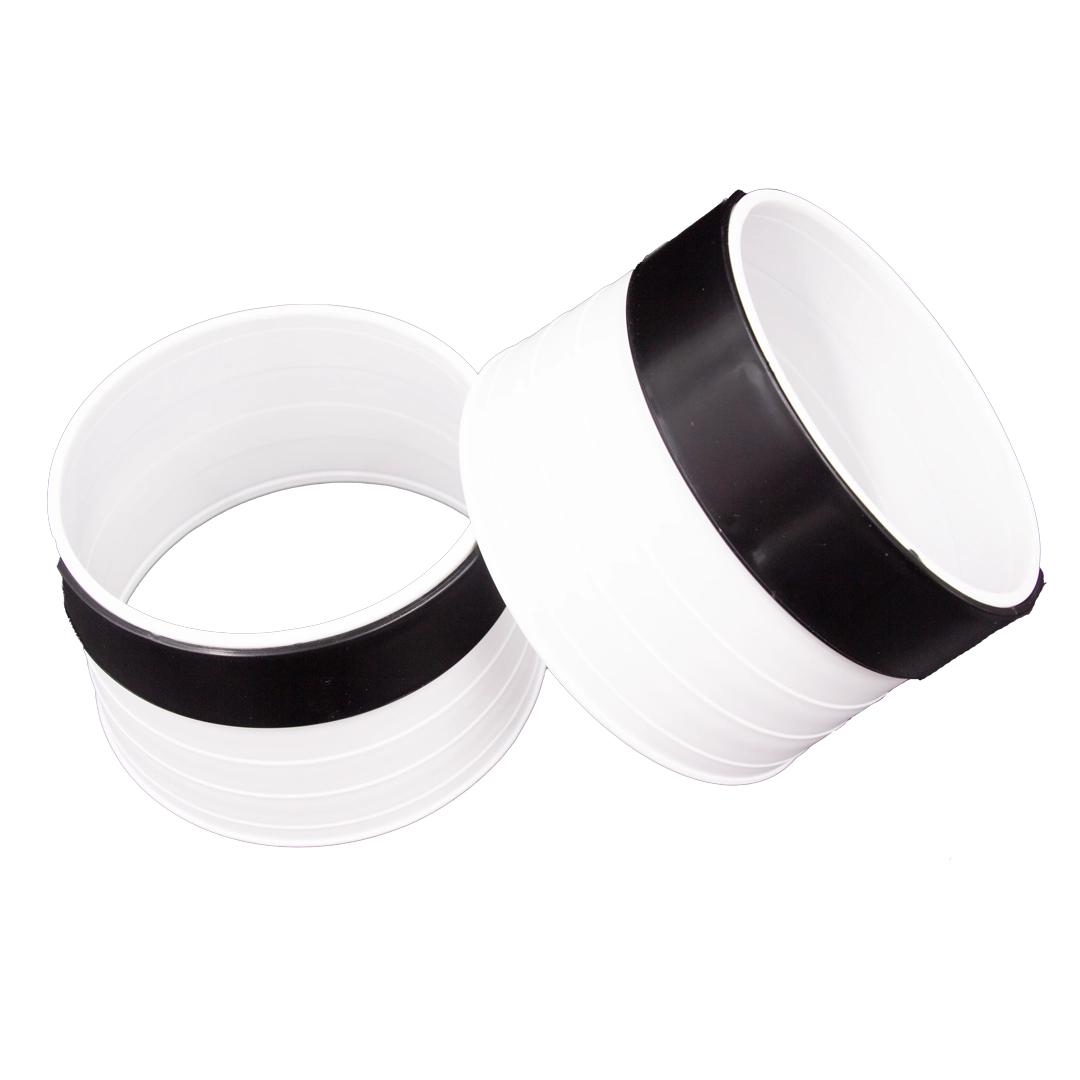
PushLock glove connection system
Wrist · Glove-to-Suit
PushLock Glove System

Use to: lock gloves to suit sleeves in a sealed connection — closing the wrist gap that splash and spray exploit. Essential for full encapsulation and high-hazard work where an open cuff is a liability.

Shop PushLock ›
The Takeaway

Protection = Material + Time + Seal

PPE beats people because they judge it by appearance. But every piece in your kit is doing one job, on a clock: the right material for the specific hazard, used within its time limit, with a good seal so nothing sneaks around it.

Get all three right and you’re genuinely protected. Get all three right and you’re protected. Get the material and the seal right but ignore the clock and you’ll be exposed by something that still looks perfectly fine. In PPE, “it looks okay” is not the same as “it’s still working.”

The science is just knowing the difference and building your glove choices, suit choices, and change schedules around it.

EXPLORE OUR PPE
References
  1. ASTM International. ASTM F739 — Standard Test Method for Permeation of Liquids and Gases Through Protective Clothing Materials Under Conditions of Continuous Contact (breakthrough time and permeation rate).
  2. U.S. OSHA. Personal Protective Equipment (29 CFR 1910 Subpart I) and OSHA Technical Manual — dermal exposure and chemical protective clothing selection.
  3. NIOSH. NIOSH Guide to the Selection and Use of Particulate Respirators and 42 CFR Part 84 — N/R/P-series filter classifications, including P100.
  4. 3M Technical Data Bulletins. Respirator Cartridge and Filter Service Life — effects of concentration, humidity, and work rate on gas/vapor cartridge breakthrough.
  5. NIOSH. Skin Exposures and Effects — dermal absorption as an under-recognized route of occupational chemical exposure.
  6. Lakeland Industries & SHOWA. Manufacturer chemical-permeation and physical-property data for ChemMax, MicroMax, and nitrile glove lines (always verify against the specific chemical handled).
Share the Post: