

People use the two words like they mean the same thing. They are close cousins, not twins, and the difference is worth five minutes of your time.
On a fire job somebody says the fasteners are oxidizing. On a water loss somebody says the nail plates are corroding. Same family of chemistry, two different words, and most days nobody minds. But there is one question hiding underneath, and it is a good one: is this going to stop on its own, or keep going until the metal is gone?
Here is the whole thing in two lines. Oxidation is what is happening in the chemistry. Corrosion is what is happening to your building.
They overlap in one very familiar place, which is probably how the words got tangled up. Rust is both. Iron oxidizes, and the result is a weaker piece of steel. Outside of rust they come apart cleanly, and the easy way to hold onto it is this: corroding metal is always oxidizing, but plenty of oxidation never corrodes anything.
Oxidation is not really about oxygen. It got named that way centuries ago and the name stuck. Chlorine, peroxide, ozone, and even sulfur compounds do the same job, which is why sealing a space up does not stop the chemistry.
Corroding metal is basically a tiny battery, and a battery needs a complete circuit. Pull out any one piece and it quits.
Where the metal gives up electrons and dissolves. Often just a scratch, a weld, or a slightly different patch of the same surface.
Where those electrons get picked up, usually by oxygen and water. No cathode, no anode. The two go together.
A wet film that carries ions between the two. Clean water is a weak one. Water carrying salts, soot, or gypsum is a great one.
Something for the electrons to travel through. On a single piece of steel, that is the steel. Good luck removing it.
Three of those four are already baked into the building. The wet film is the one you can actually take away, and taking it away is most of what you are doing anyway.
Which is a nice thing to know, because it means drying a structure is not only a mold move. It is a corrosion move too, and on a fire job it is often the more urgent of the two.
Aluminum actually oxidizes faster than steel does. It starts reacting the second you cut it. So why do aluminum window frames last thirty years outdoors while a steel fastener in a damp crawlspace does not survive the winter?
It comes down to the film each one leaves behind. Aluminum and stainless build a layer that is thin, dense, and tightly bonded to the metal underneath. It seals the surface, and once it is there the reaction basically stops. That dull grey haze on old aluminum is not damage. It is armor.
Plain steel builds the opposite. Rust is flaky and porous and takes up a lot more room than the steel it came from, so it lifts, cracks, and falls off, handing the reaction a fresh surface to chew on. Water and oxygen get straight through it. It never runs out of road.
Oxidation is not the villain. A film that will not seal is.
Every piece of metal in the building is oxidizing right now. The ones you never think about are the ones that sealed themselves and got on with it. The ones that end up in your scope are the ones that could not.
So the question on site is never really "is this oxidizing." It is "is anything going to stop it."
Five things you have seen, and what is actually going on in each one.
| What you are looking at | What it is |
|---|---|
| A peroxide cleaner lifting a stain | Oxidation, no corrosion anywhere. The oxidizer breaks apart the piece of the molecule that carries the color. This is the reaction working for you. |
| Dull grey aluminum trim | Oxidation that is preventing corrosion. The haze is the protective film, and it is the reason the metal underneath is fine. |
| Orange scale on joist hangers | Both, and the classic case. The rust is porous, so the surface never seals and the steel keeps getting thinner. |
| Rebar cracking a foundation wall | Corrosion, caused by lost protection. Concrete is very alkaline and that alkalinity keeps the steel safe. Once carbonation or road salt takes that away, the steel corrodes and swells until the wall cracks. |
| Ozone knocking out a burnt smell | Oxidation on purpose, with a corrosion side effect if you run it too long. The same punch that breaks odor molecules also goes after rubber, wiring, and bare metal. |
Most corrosion you deal with shows up fast. This one takes years, which is exactly why it gets expensive. Fresh concrete is strongly alkaline, and that alkalinity keeps the rebar inside it passive. The steel is oxidizing in there, technically, but it sealed itself and stopped. Nothing to worry about.
Two things take that protection away. Carbon dioxide works its way in from the air and slowly reacts the alkalinity out of the concrete, and chlorides from road salt or soil ride in with water and break the passive film outright. Once the protection is gone the rebar corrodes for real, and rust takes up considerably more room than the steel it came from. So the steel swells, and the wall cracks from the inside out. By the time you see the crack, the reaction has been running for a long while.
You cannot get to the rebar, so you go after what reaches it. On a wall that is already built, controlling water is the practical lever you have left, and it does double duty. It keeps chlorides from arriving in the first place, and it keeps the wet film out of the corrosion cell. That is why waterproofing is a structural decision and not just a moisture one.
Every one of these is aimed at the same target. Get rid of the wet film, because it is the piece you can reach.
A moisture reading tells you a film is there. It does not tell you how aggressive it is. Chlorides from burned plastics, salts wicking through masonry, and category three water all turn a so so moisture problem into a fast one.
Clean steel needs somewhere around 60 percent relative humidity before it really gets going. Salty steel starts well below that, because the salt holds its own water. A building can feel dry and still be losing metal.
Wiping soot until a surface looks acceptable leaves the salts behind, and the salts are the fuel. Remove, rinse, then dry the rinse, because leftover cleaner is just a fresh wet film with a longer life than the one you removed.
If a run of exposed metal has to wait for a later phase, coat it, inhibit it, or wrap it. This is the entire reason a first response corrosion inhibitor exists, and it gets its own section below. Time sitting untouched is the one thing that makes every other decision harder later.
Timing is the whole story here. Corrosion starts while the building is still wet, and the chloride salts a fire leaves behind pull moisture out of the air and keep the reaction running long after the flames are out. Every hour metal sits under that film is thickness nobody gets back.
That first response window is the gap ShineOn was built for. It goes on as a corrosion inhibitor before remediation work starts, on the metal and plastic you cannot afford to lose: pipes, wiring, electrical boxes, ducting, metal tape, fasteners, hangers, and anchors. It is ready to use, so nobody is mixing anything at two in the morning, and it pulls double duty on plastics by replenishing the oils that keep them from going brittle.

Ready to use, so it goes on the moment you have access. Protects pipes, wiring, electrical boxes, ducting, metal tape, fasteners, hangers, and anchors before corrosion gets started, and restores plastics at the same time. Available from one quart up to four gallon cases.
Shop NowIt earns its keep in four places in particular.
Fasteners, plates, hangers, and panel hardware sit in the wettest part of the structure and get looked at last. Treating them early protects the pieces nobody wants to open a wall to replace.
This is the fastest clock on the list. Acidic residue from burned plastics keeps working on exposed metal for weeks, so a protective film applied early is worth more than a perfect cleaning applied late.
Coils, electrical components, fasteners, and duct hardware fail quietly and long after the visible work wrapped up. They are also the components a homeowner notices last and complains about loudest.
It cleans and polishes metal and plastic while it protects, so equipment and fixtures come back looking right instead of just being technically salvaged.
A protective film applied on day one beats a perfect cleaning applied on day four.
Corrosion is the only damage on a loss that keeps getting worse while everyone waits for approval. Almost every other line item can sit for a few days without changing. This one cannot, and the metal does not care whose signature is missing.
That is also why it is billable now. For years corrosion control was something careful crews did quietly and never charged for. The fire and smoke side of the IICRC standards now treats corrosion mitigation as part of properly restoring the loss rather than an optional nicety, and once a step lives inside a standard it stops being a preference you have to defend and starts being a procedure you performed.
A step inside a standard still needs paperwork behind it. The Insurance Justification Docs in EnviroDocs lay out the product, the condition it addresses, and the standard that supports it, so the line item arrives already explained. They are free for contractors, and there is nothing attached to them.
Go back to habit three for a second. The reason residue matters is that whatever you leave on the surface becomes the electrolyte. Salts, acidic soot, and leftover detergent all conduct, and a surface that was cleaned but not rinsed and extracted can sit there running the same reaction you were trying to stop.
That is where the REACT|EXTRACT approach earns its keep on the corrosion side. The two part reaction between OxyPrep and OxyPar foams the soil load up off the surface and holds it there so it can be vacuum extracted, which means the contamination physically leaves the building instead of drying back down into place. The neutralization brings the surface back to roughly pH 7 on the way out.
Both halves of that matter here. Extraction removes the salts that would have held water against the metal, and neutralization means you are not handing the surface an acidic or alkaline residue to work with instead.
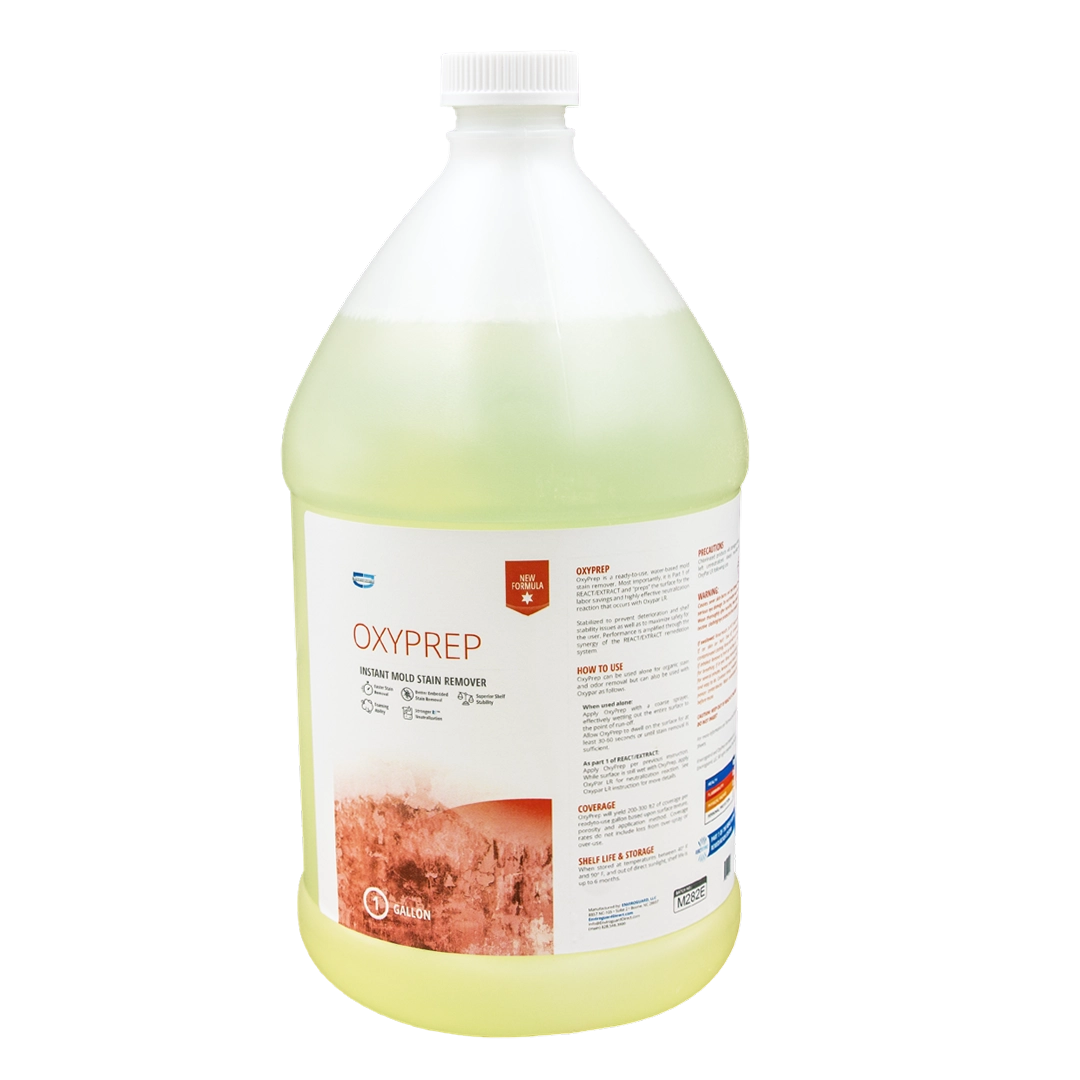
The peroxide side of the pair. It goes down first and does the oxidizing work on the soil load, which is the half that breaks the contamination apart rather than just loosening it.
Shop Now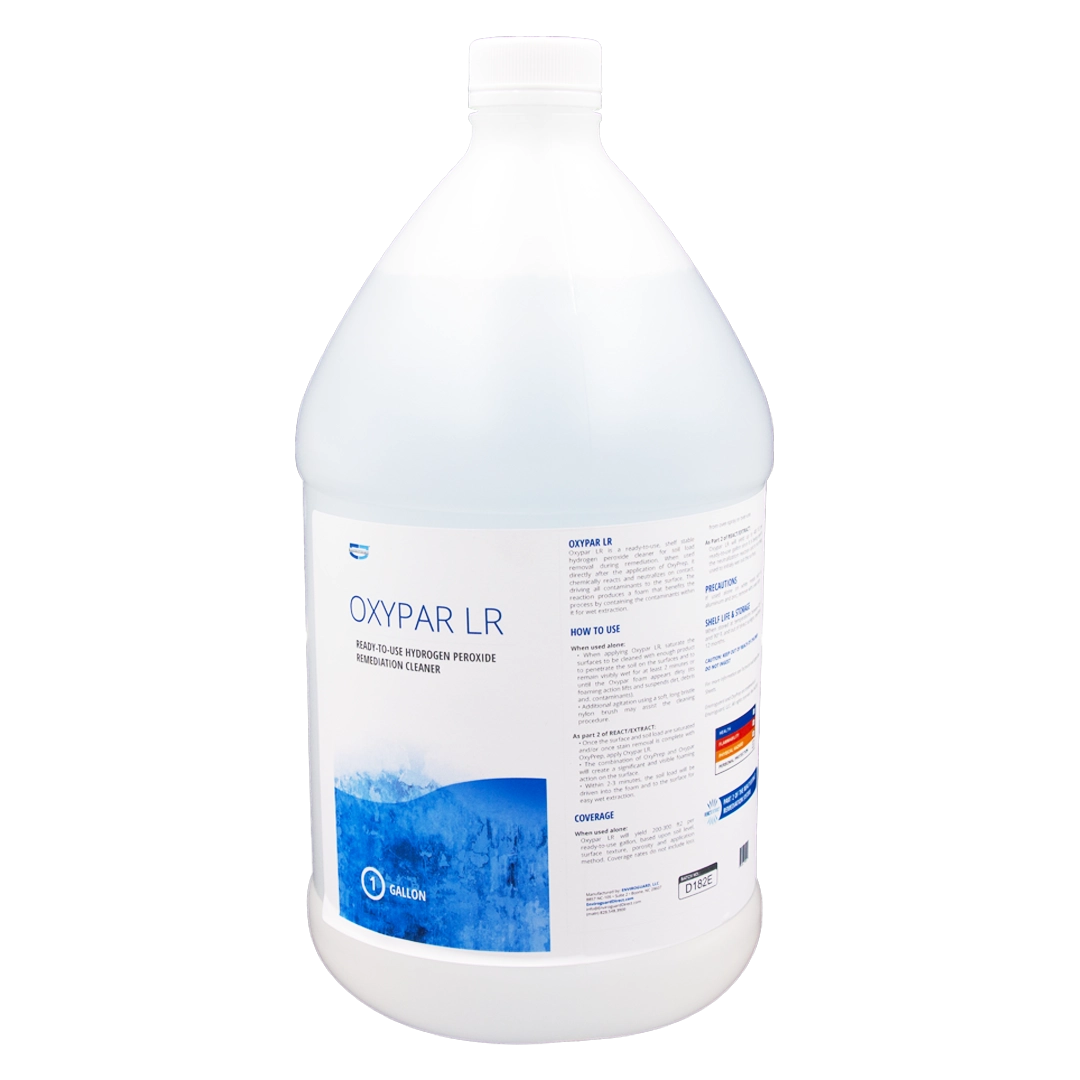
Clean is not the finish line. Clean, neutral, and extracted is, because that is the version that leaves nothing behind for the reaction to run on.
Everything above treats oxidation as something to manage. Worth remembering that it is also something people use on purpose, every day. Odors, soot binders, organic stains, and biofilm are all built from bonds an oxidizer can break, and once those bonds are broken the molecule is genuinely gone. Nothing is being covered up or masked.
That is the whole idea behind peroxide chemistry, chlorine dioxide, hypochlorite, and ozone. Different strengths, different delivery, same basic move: hand the problem molecule a reaction it cannot survive.
Anything strong enough to destroy an odor molecule is strong enough to go after metal. Oxidizers work by dose and dwell, not by being left running. Apply, hold the contact time, rinse, dry. That is what keeps the good half of this chemistry from quietly turning into the other half.
Oxidation asks what reaction is running. Corrosion asks what it is costing you. Rust happens to be both, which is why the words get swapped so often, and honestly it rarely matters in conversation.
Where it does matter is the follow up. Next time somebody says the metal is just oxidizing, ask whether anything is going to stop it. If the surface sealed itself, you can leave it alone. If there is water sitting against that metal, whether it is salty residue on a fire job or groundwater against a foundation wall, it is not stopping on its own.
ShineOn goes on early, before remediation starts, on the pipes, wiring, boxes, ducting, and fasteners that quietly decide whether this job is a cleaning or a replacement. Ready to use, from one quart up to four gallon cases, and now a line item you can actually defend.
Shop ShineOn →