
May's newsletter is out! ✉️

FOR RESTORATION OWNERS

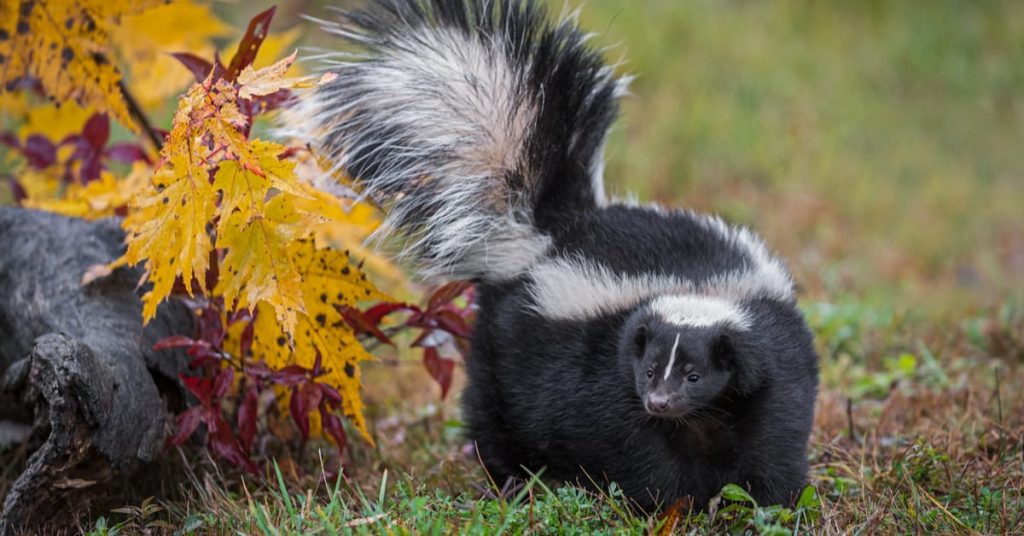
The Skunk Left.
The Chemistry Stayed.

Skunk spray isnt’t a smell. It’s a chemical generator that reloads every time it gets wet. There’s what’s in it, why it keeps coming back, and the three-step fix.

JUNE 15, 2026  ·  ODOR REMEDIATION  ·  5 MIN READ

Let’s Set the Scene

It’s 11 p.m. and you’re letting the dog out one last time. From the dark corner of the yard, you hear a single, panicked woof, then silence. The dog comes barreling back wearing an expression of pure betrayal and a perfume that could strip paint. You bend down to check on him. Mistake. Now it’s on your hands, your sleeve, and even the doorframe you grabbed to balance yourself while reeling.

So you do what everyone does, you buy a whole case of tomato juice. For twenty glorious minutes you think you’ve won. After the last of the juice has run down the drain and your nose has recovered, the bathroom warms up, and there it is again. Here’s the part that’s funny at home and expensive on a job site: you didn’t fail at cleaning. You failed at chemistry. Scale that up to a crawl-space den or an HVAC return that pulled spray through the whole house, and the funny story becomes a very unfunny callback.

Skunk odor beats people because it isn’t one compound and it isn’t even fully active when you meet it. Part of what a skunk sprays is a slow-release reservoir that keeps regenerating the smell for weeks. Treat what you can smell today and walk away, and the job comes back the first humid night.

Know What You’re Dealing With

Two Problems Wearing One Smell

Striped skunk (Mephitis mephitis) spray is a mix of thiols and thioacetates. The thiols (sulfur compounds with an –SH group your nose detects at almost impossibly low levels) are the smell you notice instantly. The thioacetates are the reason it doesn’t leave.

ComponentClassSmells On Contact?Water Soluble?Remediation Behavior
(E)-2-Butene-1-thiol Primary OdorThiolYes — intensePoorlyVolatile, oxidizes readily, responds to treatment
3-Methylbutane-1-thiol Primary OdorThiolYes — intensePoorlyVolatile, oxidizes readily, responds to treatment
2-Quinolinemethanethiol PersistentThiolYesVery poorlyHeavier, clings to substrates, slower to clear
Thioacetate derivatives Time-ReleaseThioacetateWeaklyPoorlyHydrolyze in water to release NEW thiols — the callback source

⚠ Field Note

The thioacetates are why “it came back when it got wet”

Alongside the thiols, skunk spray carries thioacetate derivatives — the same thiols with an acetyl cap on the sulfur. On their own they’re only weakly odorous, which is exactly why they’re dangerous: you don’t smell them, so you assume they’re gone.

But thioacetates aren’t stable around water. Add moisture and they hydrolyze — the cap breaks off and a fresh, fully-active thiol is released into the air. That’s the mechanism behind every “I cleaned it and it came back.” The reservoir was never removed; it was waiting for humidity. So a job that smells clean on a dry afternoon can fail completely the next week. You’re not removing an odor — you’re deactivating a generator, which takes oxidation, not cleaning.

The Science of Odor

Why a Skunk Carries a Mile

A smell is just a volatile molecule that is light enough to leave a surface, reach your nose, and bind to a receptor. Two things decide whether you smell it: how readily it evaporates, and how low a dose your nose can detect. Skunk thiols max out both.

It’s the same physics behind cooking odors: searing a steak or frying onions drives the Maillard reaction and lipid breakdown, releasing volatile aldehydes, ketones, and sulfur compounds that fill a room fast and soak into drapes, drywall, and cabinet grease film. Fish and fried-oil smells linger longest because their sulfur compounds are both volatile and detectable at tiny thresholds. Same principle as skunk — just a much gentler scale.

Thiols: The Most Detectable Smell in the Building

The human nose is almost absurdly sensitive to sulfur thiols because evolution wired us to flag decay. Skunk thiols are detectable in the low parts-per-billion (ppb) range. These are the same compounds added to naturally-odorless natural gas so a tiny leak is unmistakable — at ppb levels. Your nose is a more sensitive detector than most gear you’d find in the back of your truck.

That reframes “it smells clean.” A space can read remediated and still carry a real skunk note — and worse, smell clean today while a thioacetate reservoir quietly regenerates thiol for weeks. Olfactory clearance is not chemical clearance.

ppb

Thiol Detection

Skunk thiols are detectable in the parts-per-billion range — far below where most field instruments reliably read.

7

Major Compounds

Striped skunk spray contains roughly seven principal volatile compounds: a mix of thiols and their slow-release thioacetates.

Weeks+

Regeneration Window

Untreated thioacetates can keep hydrolyzing into fresh thiol for weeks to months whenever moisture is present.

Common Failure Points

Why These Jobs Come Back

Skunk callbacks aren’t bad luck — they trace to a handful of predictable chemistry mistakes.

Tomato juice, coffee grounds, fragrance foggers. None oxidize thiols. They work through olfactory fatigue — your nose quits on the smell because a stronger one drowns it out. The thiols and the whole thioacetate reservoir are untouched. The moment your nose recovers, the skunk is right where it was.
Cleaning with water or steam before oxidizing. This actively backfires. Moisture accelerates thioacetate hydrolysis, so a contaminated substrate can smell stronger after cleaning than before. The homeowner concludes it’s impossible to remove — really, they just fed the reservoir.
Surface-only treatment. Skunk oil wicks well past the visible spray pattern and down into the pore structure. Spray the contact zone and stop, and the embedded reservoir keeps regenerating thiol from below. Perimeter and depth must follow where the contamination actually migrated.
Missing the HVAC and the deep substrate. A return near the event pulls oily aerosol into ductwork and coil — a distributed source no surface treatment reaches. And on crawl-space wood, concrete, or subfloor, residual thioacetate sits below oxidation’s reach. Both need the gas-phase step and a seal, or the next rainy week brings it back.
Professional Protocol

The System: Oxidize It, Reach the Vapor, Seal It In

In Three steps, one fixed order. Oxidize the thiols, deactivate the thioacetates wherever they hide, and seal the deep residuals against moisture. Skip one step and the result is predictably incomplete.

Skunk Odor Remediation — Three-Step Protocol

Oxidize the thiols. Reach the vapor and the voids. Seal the reservoir.

Step 1

Oxidize at Source

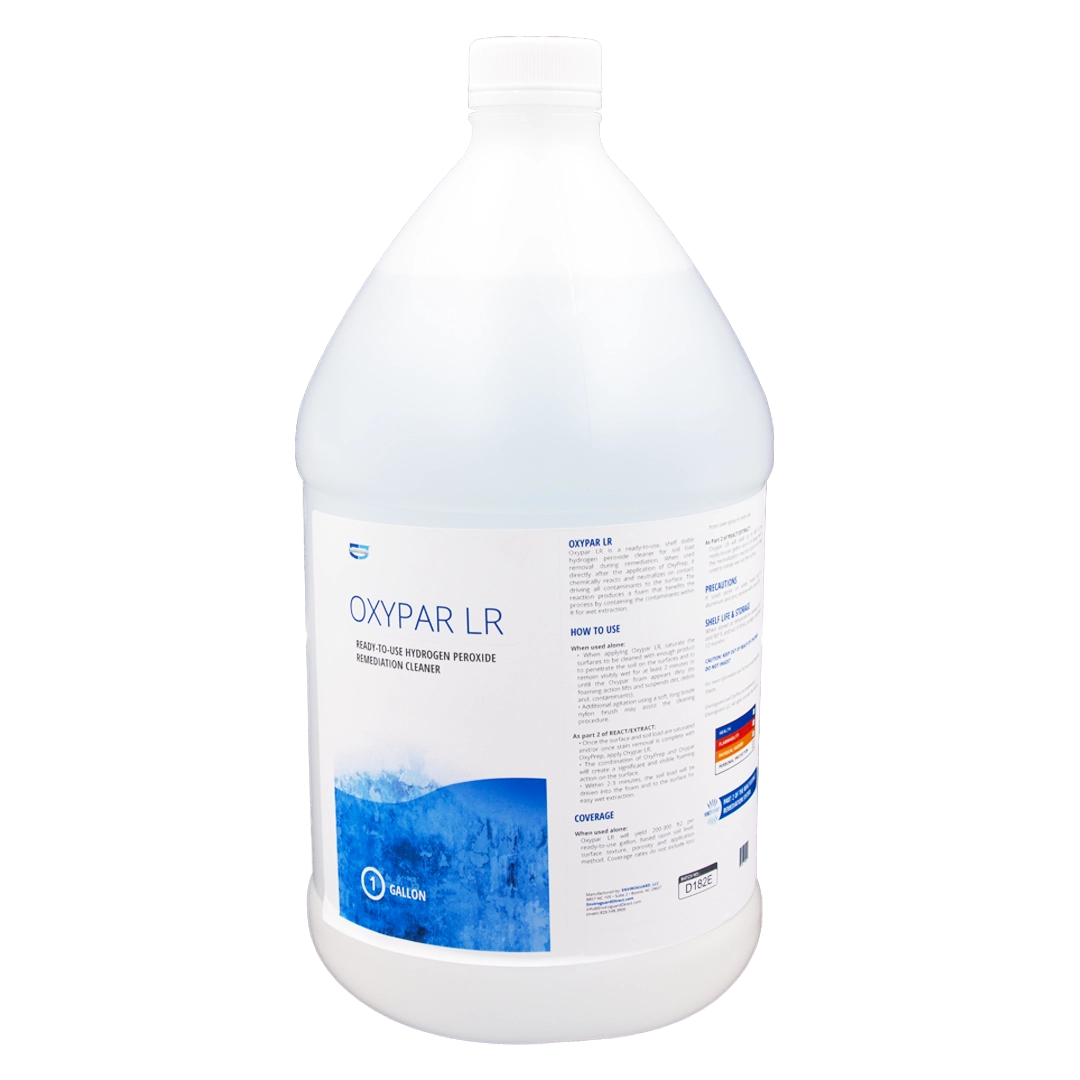
OxyPar LR

Step 2

Oxidize the Vapor

Dutrion Wet & Dry

Step 3

Vapor Barrier

VaporLock

1

Oxidize the Thiols at the Source — OxyPar LR

OxyPar LR
OxyPar LR

You can’t clean away a thiol — you have to chemically change it. OxyPar LR’s peroxide-based oxidizing chemistry attacks the sulfur directly, converting volatile, intensely-odorous thiols into odorless, non-volatile sulfonates. It’s the professional version of the well-known peroxide skunk remedy, built to penetrate substrates instead of just foaming on top — and it deactivates the thioacetate reservoir wherever the liquid reaches, before it can hydrolyze into new thiol.

Apply across the full contamination footprint, not just the visible spray pattern, with dwell time to reach the pore structure. On heavily loaded porous materials, a second pass is standard.

Shop OxyPar LR ›
2

Oxidize the Full Vapor Inventory — Dutrion Wet & Dry

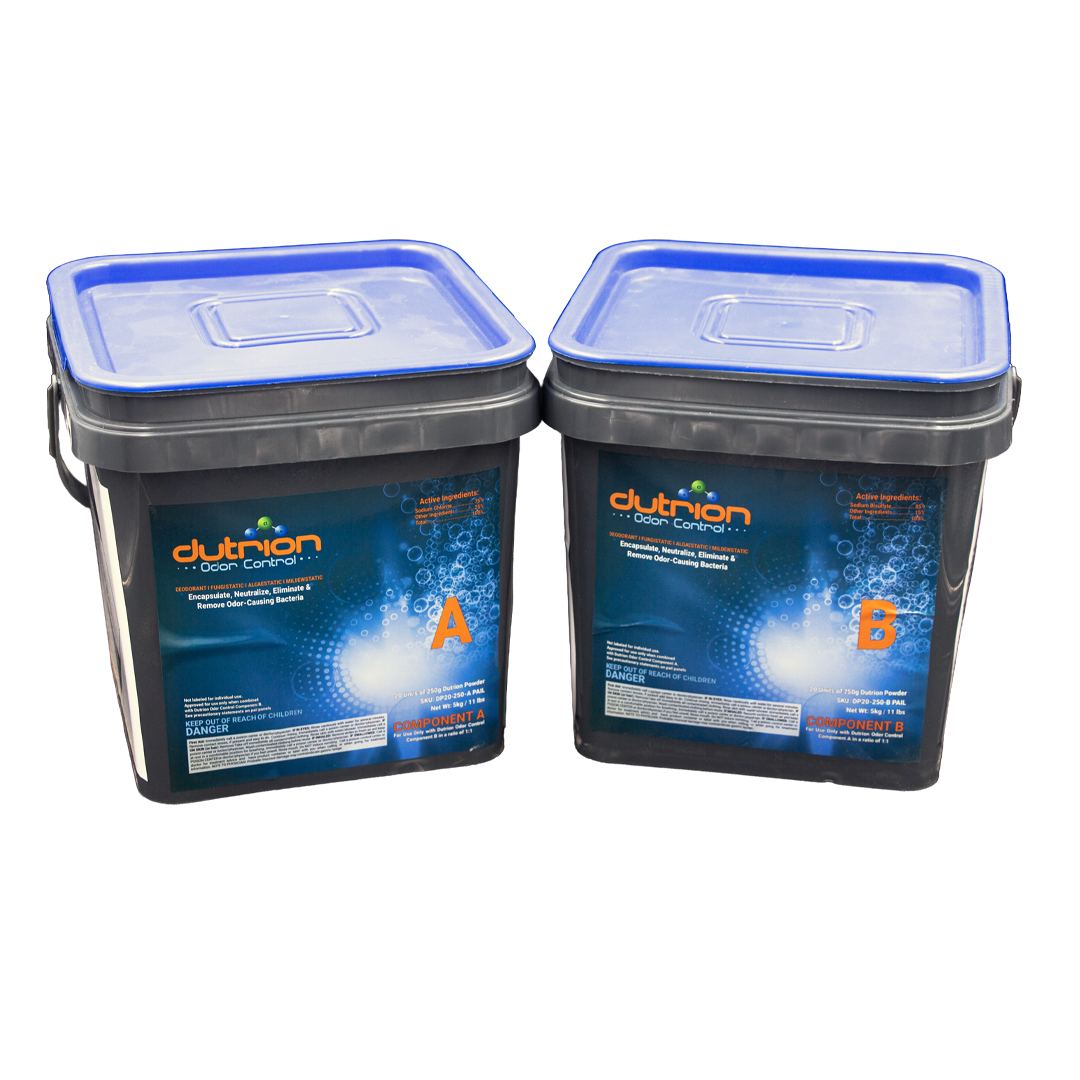
Dutrion Wet & Dry
Dutrion

After source oxidation, sulfur compounds still hide where liquid can’t go — the air, the HVAC system, wall cavities, subfloor voids. Dutrion’s chlorine dioxide (ClO₂) is a radical oxidizer that reacts aggressively with thiols and works in both liquid and gas-phase form.

The gas phase is where it earns its place: ClO₂ vapor penetrates ductwork, insulation, and crawl-space surfaces no liquid can coat, reaching distributed residue throughout the structure in one correctly-dosed treatment. Containment integrity during dwell is non-negotiable — any air exchange dilutes the dose and leaves the reservoir partially treated.

Shop Dutrion ›
3

Close the Re-Emission Pathway — VaporLock

VaporLock
VaporLock

Steps one and two eliminate everything they reach. VaporLock handles the rest — not by destroying it, but by making it irrelevant. Applied to treated wood, concrete, OSB, and subfloor, it forms a vapor-impermeable barrier that blocks any residual sulfur compounds below the treated zone from reaching the occupied air.

This is what defeats the moisture-driven regeneration cycle for good: even if humidity hydrolyzes trace thioacetate down there, the new thiol has no pathway out. Mandatory on crawl-space dens, structural contamination, and any long-dwell loss where treatment can’t guarantee full-depth reach. It’s the difference between a job that holds through wet season and one that comes back.

Shop VaporLock ›
The Takeaway

Skunk Odor Is Chemistry. Treat It Like Chemistry.

Skunk spray beats people because it isn’t one smell on a surface. It’s thiols you detect at parts-per-billion plus thioacetates that regenerate those thiols every time moisture hits them. Anything that only treats what you smell today leaves the generator running.

The fix follows from the chemistry: oxidize the thiols and their precursors at the source, reach the vapor and voids with gas-phase oxidation, and seal the deep residual so moisture can’t restart the cycle. Control comes from breaking the chemistry at the source and preventing it from restarting.

References
1

Wood, W. F., Sollers, B. G., Dragoo, G. A., & Dragoo, J. W. (2002). “Volatile components in defensive spray of the striped skunk, Mephitis mephitis.” Journal of Chemical Ecology, 28(9), 1865–1870.

2

Wood, W. F. (1990). “New components in defensive secretion of the striped skunk, Mephitis mephitis.” Journal of Chemical Ecology, 16(6), 2057–2065.

3

Krebaum, P. (1993). “Deskunking formula” (hydrogen peroxide, sodium bicarbonate, and liquid soap). Chemical & Engineering News, October 18, 1993.

4

Aldrich, T. B. (1896). “A chemical study of the secretion of the anal glands of Mephitis mephitica (common skunk).” Journal of Experimental Medicine, 1(2), 323–340.

5

Agency for Toxic Substances and Disease Registry (ATSDR). Medical Management Guidelines: thiols and mercaptans — odor thresholds and properties. U.S. Department of Health & Human Services.

6

U.S. Environmental Protection Agency. “Volatile Organic Compounds’ Impact on Indoor Air Quality.” EPA Indoor Air Quality (IAQ) resources.

Share the Post: