

Musty odors are among the most misunderstood and mishandled problems in property remediation. Here’s the science behind what causes them, where they hide, and what it actually takes to eliminate them for good.
ENVIROGUARD FIELD GUIDE · ODOR REMEDIATION · 7 MIN READ
FROM THE FIELD
You pull up to a property. Maybe your client is thinking about renting it. Maybe they are seriously considering buying it. You step through the front door and before you have looked at a single wall, before you have checked a single outlet, before the door has even fully swung open, it hits you. That dense, heavy, earthy smell that settles right into the back of your throat and stays there. Musty. Old. Damp. It smells exactly like a problem that has been sitting untouched for a very long time.
We know that smell well. And lately, we have been living with it every single day. As many of you know, we recently moved our office to Newland, NC. Beautiful town, great community, we genuinely love it. But our next-door neighbor? An abandoned property. Has been sitting vacant for years. No HVAC running, no ventilation, nothing. And on warm days, especially after it rains up here in the mountains, that musty odor drifts right over to our front door. Our whole team smells it. We step outside for coffee and there it is. We pull up to the office in the morning and it greets us before we even get out of the truck.
We joke about it. But we also know exactly what it means. That smell is not just unpleasant. It is a biological process that has been running unchecked inside those walls, floors, and ceilings for who knows how long. And we know, better than most, that it is not going to fix itself. It never does.
That is actually what inspired this piece. Because if you work in real estate, property management, or remediation, you are going to walk into that situation constantly. Vacant homes, foreclosures, rentals between tenants, properties that sat on the market too long. Musty odor does not discriminate by price point or zip code. And it is never just a smell. It is a signal worth reading carefully before anyone signs anything.
A musty odor is one of the most informative things a building can tell you. It is not a random occurrence. It is a signal of moisture history, of organic accumulation, of conditions that have existed long enough for microbial colonies to establish themselves inside the materials of the structure. Learning to read that signal accurately is part of what separates a seasoned remediation professional from someone who shows up with an air freshener.

The musty odor is not the problem itself. It is the symptom of a process that has already been underway for some time. The smell is produced primarily by microbial volatile organic compounds, or MVOCs: the gaseous byproducts released by mold, mildew, bacteria, and other microorganisms as they metabolize organic matter embedded in building materials, furnishings, and textiles.
The trigger is almost always the same. Moisture has been present long enough, and in sufficient quantity, for a biological community to establish and grow. That moisture may originate from an unresolved leak, from chronic condensation, from poor drainage around the structure’s envelope, or simply from elevated ambient humidity in a space that lacks the airflow to correct itself. In vacant or minimally ventilated properties, the building has no mechanism to dry out once organic materials reach that saturation threshold.
What makes musty odor particularly challenging as a remediation target is that the source is biological and embedded. The MVOCs are not being emitted from a single point. They are being generated across the surface area of every affected material in the space: carpet backing, drywall paper facing, ceiling tile, wood framing, HVAC insulation lining, upholstered furniture, and more. Every square foot of colonized material is an active emission point. That is why opening a window for a few days does not solve it.
THE MOISTURE THRESHOLD THAT CHANGES EVERYTHING
When sustained indoor relative humidity rises above 60%, most common building materials cross their moisture equilibrium point. At that threshold, materials that appear visually dry to an inspector are already holding enough moisture in their cellular structure to support biological colonization. The surface looks fine. The interior of the drywall, the back of the baseboard, the wood sheathing behind the vapor barrier, those are a different story.
Materials like drywall, cellulose insulation, carpet backing, and dimensional lumber are particularly susceptible because they are both hygroscopic and organic. They absorb atmospheric moisture and they provide a nutritive substrate for mold and bacteria once that moisture reaches sufficient concentration. The organism does not need a visible puddle. It needs the material itself to be wet enough, which at 60% RH or above, it is.
What determines whether a building self-corrects or continues deteriorating is airflow. A building with adequate mechanical ventilation and air exchange will cycle moisture out of the space before materials saturate. A building that lacks that airflow, whether due to vacancy, HVAC failure, or poor design, has no corrective mechanism. Once colonization begins in those static-air conditions, the MVOC output accelerates rather than resolves on its own.
One of the most common mischaracterizations of musty odor is that it is a basement or crawl space problem. That framing leads to incomplete assessments and missed contamination. Twenty years in this field makes the pattern clear: musty odor conditions can exist in any room of a structure, and the specific room profile tells you something about the moisture source driving it. Know what to look for in each zone.
Basement & Crawl Space
The most common site. Ground moisture vapor migrates upward through slab and block walls continuously. Without active vapor control and ventilation, materials saturate and mold establishes in wall cavities, on framing, and in insulation over time.
Bathroom
Chronic steam accumulation without adequate exhaust ventilation saturates drywall, grout, tile backer, and subfloor. Musty conditions behind walls and under flooring are frequently present even when visible tile surfaces appear clean.
Bedroom
Window condensation, closet airflow restriction, and mattress moisture off-gassing all contribute. Musty conditions in bedrooms are often localized to closets, exterior wall cavities, and areas beneath furniture with poor floor clearance.
Kitchen
Under-sink cavities with slow plumbing leaks, dishwasher drain connections, and refrigerator pan accumulation are the primary culprits. Musty odor in kitchens often originates inside cabinets or within wall cavities adjacent to the sink run.
Living & Dining Areas
Carpet in older properties absorbs and retains atmospheric moisture over years of use. In homes with chronic humidity issues, carpet backing and subfloor can develop widespread mildew colonization with no visible surface indication other than the odor itself.
HVAC System
The distribution system for the entire structure. Condensation on evaporator coils, biologics in drain pan accumulation, and mold colonization inside ductwork insulation can broadcast musty odors to every room simultaneously through normal system operation.
From a real estate and rental perspective, this multi-room possibility is exactly why a single air freshener in the entryway, a tactic common to property staging, should raise immediate flags for any experienced professional walking the space. If the odor is present in the entryway, it is likely present at depth in the materials throughout the structure, and it will return after any masking agent dissipates.

The characteristic “old basement” or “musty” smell is produced by a specific class of compounds: microbial volatile organic compounds, or MVOCs, released as metabolic byproducts by mold and bacterial colonies as they digest organic substrate material. The MVOC profile of a musty space varies based on the species composition of the microbial community present and the substrate being metabolized, but the dominant compounds responsible for the perception of mustiness are well-characterized.
PRIMARY MVOC
Geosmin
The compound most associated with the “earthy” or “after-rain” component of musty odor. Produced by Streptomyces bacteria and certain mold species during metabolic activity, geosmin is detectable by the human nose at concentrations as low as 5 parts per trillion. It is one of the most potent natural odorants known.
PRIMARY MVOC
1-Octen-3-ol
Known as “mushroom alcohol,” this compound is produced during the oxidative degradation of linoleic acid in fungal cell walls. It is among the most ubiquitous MVOCs in water-damaged building environments and is strongly associated with active mold colonization of drywall and cellulosic materials.
ORGANIC BYPRODUCT
2-Methylisoborneol (MIB)
Produced alongside geosmin by actinobacteria, MIB contributes a distinctive camphor-like note to the musty odor profile. Like geosmin, it is detectable at extremely low concentrations and is chemically resistant to many conventional cleaning and deodorizing agents.
SECONDARY MVOC
Aldehydes & Ketones
A range of short-chain aldehydes and ketones, including 2-pentanone, 2-hexanone, and acetaldehyde, are released during fungal metabolism of cellulose, lignin, and protein-based building materials. These compounds contribute the musty “closed room” and “wet cardboard” notes common to long-vacant structures.
The practical consequence of this MVOC chemistry is significant: these compounds are not being emitted from a single surface contaminant that can be wiped away. They are being continuously generated by active biological communities living within the matrix of porous building materials. As long as those communities remain viable, and as long as moisture and organic substrate are available, the MVOC output continues. Treatment that does not address the biological source will not produce durable odor elimination.
WHY HUMIDITY MAKES IT WORSE AND WHY TIMING MATTERS
One of the more confusing and frustrating patterns for both clients and contractors is the callback that occurs weeks after treatment appears successful. The space was treated correctly and the odor had been eliminated but, six weeks later, the client reaches back out to inform you that the smell has returned. In most of these cases, the treatment was performed during a dry period and the odor assessment was completed while ambient humidity was low. The failure was in detection, not treatment, and because of that, the microbial colonies were not fully eliminated. When humidity rose again and the material moisture increased, MVOC production resumed and off-gassing returned to detectable levels.
Relative humidity (RH) directly controls MVOC volatility. As humidity rises, MVOC molecules transition more readily from the surface of colonized materials into the vapor phase of the room air. A space that smells acceptable at 40% RH can present a strong musty odor at 70% RH with no change in the underlying contamination level. Assessment conducted only in dry conditions routinely underestimates the severity of the problem as the odors will present themselves to occupants during normal weather and seasonal cycles.
This humidity-volatility relationship is why source-material-level treatment is required rather than airspace-level treatment. Improving air quality in the room reduces the occupant’s immediate perception of the odor, but does not reduce the MVOC emission rate from the substrate. When conditions return to high humidity, the emission rate rebounds and the airspace concentration returns to its pre-treatment level. Durable odor elimination requires reaching and addressing the material that is generating the compounds, not the air that is carrying them.
Accurate severity classification is the foundation of correct product selection, treatment depth, and expected scope. Enviroguard’s Odor Severity Index™ (OSI) provides a standardized framework for initial assessment, ensuring that musty odor conditions are neither under-treated, which produces callbacks, nor over-scoped where simpler intervention is more appropriate. For musty odors specifically, OSI classification informs the decision to reference the Mold Severity Index (MSI) protocol for cleaning scope.
OSI-1
Light Odor
The musty odor is faint and detectable only upon close inspection or in enclosed areas such as closets, cabinets, or a specific corner of a room. Contamination is likely localized, with minimal visible mold activity and limited viable moisture in materials. Typically addressable with targeted fumigation and source removal without widespread substrate treatment.
OSI-2
Moderate Odor
The odor is distinct, persistent, and present throughout multiple areas of the space. Indoor air quality impact is measurable. Contamination has likely affected multiple surface categories and penetrated into porous materials. A full Dutrion fumigation cycle is indicated alongside substrate-level cleaning per MSI protocol and VaporLock application to affected construction materials.
OSI-3
Heavy Odor
The odor is strong, immediate, and intrusive, often perceptible before the threshold is crossed. It affects the entire occupied space and indicates deep, widespread contamination across both material substrates and the airspace. Structural material penetration is expected. Full MSI protocol cleaning, extended fumigation, and VaporLock sealing of structural components are required. Source control and possible material removal must be evaluated before deodorization begins.
The OSI classification is not a cleanup shortcut. It is a pre-treatment discipline. In real estate contexts particularly, where musty conditions have often developed over extended vacancy periods, the presenting odor intensity frequently underrepresents the actual contamination depth. Materials that have been at elevated moisture for months or years can harbor substantial mold colonization well below the surface, with MVOC output that has stabilized at levels the nose has partially adapted to during walkthrough. When in doubt, classify conservatively and verify.
Musty odor callbacks are among the most preventable in remediation and among the most common. The failure modes are consistent, and most of them trace back to incomplete source identification or inadequate treatment depth at the substrate level.
Treating the airspace without addressing the material.
Ozone generators, hydroxyl machines, and air scrubbers improve air quality within the occupied space during and immediately after treatment. They do not penetrate building materials. The mold colonies and MVOCs embedded in drywall, subfloor, and framing are unaffected, and odor return follows within weeks as those materials continue off-gassing into the treated airspace.
Failing to address the moisture source.
Deodorizing a space without correcting the condition that allowed moisture to accumulate ensures recurrence. Whether the issue is a slow plumbing leak, inadequate exhaust ventilation, a compromised vapor barrier, or HVAC condensate drainage, the biological source will re-establish once conditions allow. Remediation that does not include source control is remediation on a timer.
Incomplete coverage of affected areas.
Musty contamination does not stay neatly within visible boundaries. Mold colonies expand via hyphal growth through porous materials laterally and at depth. Treatment limited to the area of visible surface growth or most intense odor routinely leaves active satellite colonies intact, which re-seed the treated zone once conditions stabilize.
Skipping the HVAC system.
In any structure where the HVAC has been operating during a musty odor condition, the distribution system should be considered contaminated until verified otherwise. Ductwork with colonized internal lining or an evaporator coil with active mold growth will continue broadcasting MVOCs through every supply register in the building regardless of how thoroughly individual rooms are treated.
Omitting VaporLock on structural materials.
In cases of established contamination with deep substrate penetration, even thorough chemical treatment cannot guarantee elimination of every residual MVOC compound embedded in concrete, OSB, or dimensional lumber. Without vapor barrier encapsulation at those surfaces, seasonal temperature and humidity cycles will continue driving residual off-gassing back into the occupied space, often presenting six to twelve months after treatment completion.
Effective musty odor remediation requires a layered approach aligned to the specific chemistry and biology of the contamination. A single-product intervention will not produce durable results against an MVOC source that is biologically active and substrate-embedded. The professional protocol addresses musty odor at three distinct levels: source-level cleaning per MSI classification, chemical oxidative neutralization of residual compounds, and vapor barrier control of deep-substrate off-gassing. Each step closes a gap the previous step cannot reach.
THREE-STEP MUSTY ODOR REMEDIATION SYSTEM
Eliminate the biological source. Neutralize what remains. Lock out re-emission from structural materials.
1
Clean
Based on MSI Protocol
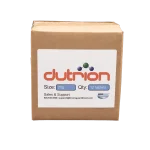
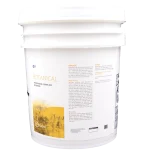
Dutrion, Botanical or RE™
2
Deodorize
Oxidative Neutralization
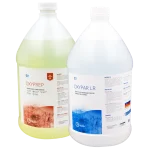
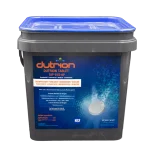
Dutrion Fumigation
3
Control
Vapor Barrier Sealing
VaporLock
For those who prefer their field knowledge reinforced with documented research, the science around musty odor formation, moisture thresholds, and MVOC behavior in building environments is well established. These are the numbers that should be informing every assessment and treatment plan.
5 ppt
Geosmin Detection Threshold
The human nose detects geosmin, the primary “earthy” musty compound, at concentrations as low as 5 parts per trillion. No air freshener concentration exceeds this detection sensitivity.
24h
Time to Mold Growth Onset
Most mold species can begin germinating on suitable organic substrates within 24 to 48 hours of moisture contact when temperatures are in the habitable range of 68°F to 86°F.
60% RH
Critical Humidity Threshold
Sustained indoor relative humidity above 60% shifts most common building materials past their moisture equilibrium point, enabling biological colonization and MVOC production in the absence of any liquid water source.
THE AIRFLOW PROBLEM: WHY ROOMS CANNOT DRY THEMSELVES
Musty odor forms when moisture sits on organic surfaces long enough for microbial communities to establish, multiply, and begin producing MVOC byproducts. The formation timeline is shorter than most people expect: under the right temperature and humidity conditions, visible mold growth can emerge within 24 to 48 hours of moisture contact. The musty odor that precedes visible growth indicates that the biological process has been active for significantly longer than the visible evidence suggests.
Inadequate airflow is the underlying driver in most chronic musty odor cases. A building with sufficient mechanical ventilation exchanges indoor air with outdoor air at a rate that prevents moisture from accumulating to biological growth thresholds in the material surfaces. A building without that exchange, whether vacant, sealed against the weather, or simply undersized for its occupant load and moisture generation, allows humidity to rise and persist until materials saturate and colonization begins.
Vacant structures are the most vulnerable category because they lack both occupant-driven air movement and active mechanical conditioning. By the time a property professional walks in and smells it, the biological process generating that odor has typically been running for months. The smell is not the beginning of the problem. It is a late-stage indicator of a process that started well before anyone was paying attention.
From a contractor’s perspective, this science has direct implications for scope assessment and client communication. Musty odor in a property that has been vacant for six months is not a cosmetic issue addressable with surface cleaning. It is a biological contamination scenario that requires a structured professional protocol: source identification, MSI-classified cleaning, gas-phase chemical treatment, and in many cases structural encapsulation. That is not an oversell. It is an accurate reflection of what the science requires to produce a durable outcome.
THE TAKEAWAY
The musty odor that hits you when you step through a door is one of the most information-dense environmental signals available to a property professional. It tells you that moisture has been present, that biology has had time to establish itself, and that the condition has progressed far enough to be actively off-gassing MVOCs into the occupied airspace. What it does not tell you, on its own, is how deep the contamination goes. That question requires a systematic assessment, not just a guess.
The correct response is not a can of spray deodorizer or a weekend with an ozone machine rented from the hardware store. It is the same response that any serious contamination scenario demands: accurate classification, appropriate cleaning scope per the MSI protocol, gas-phase chemical treatment to address the distributed MVOC load throughout the structure, and VaporLock encapsulation of any structural materials with confirmed deep penetration. This is a sequence that works while the alternatives produce callbacks.
For real estate professionals, property managers, and contractors working on pre-sale or pre-rental remediation, this matters beyond just the repair. A musty odor that returns three months after closing or after a tenant moves in is not just a warranty problem, it is a credibility problem. The three-step system exists precisely to prevent that outcome: eliminate the compound, neutralize what remains, and lock out re-emission from the structural materials. This is the standard, and this is what we deliver.
Get the product stack, the OSI training, Assessment Guide, and the SOP your crews need to stop eating callbacks on fire loss work plus placement in our Find a Pro directory.
Apply to Become a Certified Firm