Our pets bring a lot of joy into our homes. Sometimes they bring a little more than that. Here’s why those odors are harder to eliminate than they seem, and what it actually takes to get rid of them.
ENVIROGUARD FIELD GUIDE · ODOR REMEDIATION · 8 MIN READ
We love our pets unconditionally, and most of us have, at some point, loved them through an accident or two. But if you have ever cleaned a spot thoroughly and the odor persisted weeks later, you were not imagining it. Pet contamination, particularly urine and fecal matter, ranks among the most chemically persistent odor sources in professional remediation. The reason is not inadequate cleaning. It is the nature of the compounds themselves. For example, uric acid does not evaporate once dry, but crystallizes onto substrates and can be reactivated when exposed to moisture or humidity. Surface treatments alone cannot reach it.
Most household odors reside primarily at the surface level. Pet odors do not. Urine contamination penetrates grout lines, subfloor materials, drywall baseboards, carpet backing, and concrete, embedding organic compounds at depths that routine cleaning methods cannot reach. What is visible or detectable at the surface represents only a fraction of the total contamination load.
The odor compounds themselves are biologically designed to persist. Pheromone components within urine serve a territorial-signaling function, which are meant to be detectable over time and across environmental conditions. From a remediation standpoint, this means the biological composition of the source material actively resists degradation and keeps broadcasting, especially when humidity and temperature rise.
Fecal contamination presents a parallel challenge. The odor profile from fecal matter originates in the microbial decomposition of proteins and fats, a process that generates volatile sulfur compounds, indoles, and short-chain fatty acids. These absorb into surrounding materials well beyond the visible contact zone.
The result is a class of odor problem that requires chemical knowledge, enzymatic targeting, and a layered treatment strategy. Applying more cleaning product with greater effort won’t change the outcome.
Understanding the specific compounds responsible for pet odor recurrence is essential to selecting the correct treatment approach. The odor profile of urine contamination is not produced by a single compound but by a cascade of interrelated biological processes.
The Primary Offender: Uric Acid
Uric acid is the central reason pet odors return after cleaning. As urine dries, uric acid precipitates out of solution and crystallizes onto surrounding substrate fibers and pores. In this crystalline state, it is largely insoluble in water and inert to most conventional cleaning agents. That is why surfaces that have been repeatedly cleaned can still emit a strong odor.
The trigger is moisture. When humidity rises or a surface is re-wetted, uric acid crystals dissolve back into solution and release the volatile compounds responsible for that familiar smell. This is why a treated area can seem perfectly fine right after cleaning, then come back strong during a rainy week or a humid summer. The crystals were never gone. They were just waiting for the right conditions.
This reactivation cycle can persist for years in untreated substrates. Uric acid is not removed by water, ammonia, or most commercial cleaners. It requires enzymatic degradation at the molecular level to be truly eliminated.
Beyond uric acid, the full odor chemistry of urine contamination involves several contributing compounds:
Breakdown Product
Ammonia
Urea, the primary nitrogen carrier in urine, undergoes bacterial hydrolysis and breaks down into ammonia and carbon dioxide. Ammonia is the sharp, acrid component of fresh urine odor. As contamination ages, ammonia production continues wherever active bacterial populations are present.
Structural Component
Proteins & Organic Waste
Proteinaceous compounds within urine provide a substrate for bacterial colonization. As bacteria metabolize these proteins, secondary volatile compounds are generated, extending both the odor spectrum and the duration of off-gassing from contaminated materials.
Signaling Compound
Pheromones
Pheromone components within urine are chemically engineered to remain detectable over time. These compounds resist simple degradation and persist in substrate materials long after other urine components have dissipated. It is why older contamination can still signal strongly to both animals and humans.
Microbial Activity
Bacteria & Decomposition
The warm, organic-rich environment created by urine contamination supports active bacterial communities. Their ongoing metabolic activity produces additional volatile byproducts, meaning an untreated contamination zone is not a static problem. It is a continuously active odor source.
The practical implication of this chemistry is significant: odor is being re-released on an ongoing basis, not simply persisting from the original event. Humidity accelerates uric acid volatilization, temperature drives bacterial activity, and any re-wetting reactivates the crystallized residue. Treatment that does not eliminate these source compounds at the molecular level will not produce durable results.
Enzymatic treatment is the scientifically correct approach to urine and fecal odor elimination because it addresses the source compounds directly. Enzymes are biological catalysts, proteins that accelerate specific chemical reactions without being consumed in the process. In odor remediation, they are selected and formulated to target the precise molecular bonds present in urine and fecal contamination.
The mechanism is molecular dismantlement. Protease enzymes cleave the peptide bonds in urine proteins and fecal organic matter, breaking complex molecules into smaller, odorless amino acid components. Urease enzymes accelerate the hydrolysis of urea into compounds that are then further processed by additional enzymatic action. Lipase enzymes target fats present in fecal contamination, breaking them into fatty acids and glycerol, both of which are far less volatile and odorous than their parent compounds.
Critically, enzymatic treatment acts on uric acid precursors and the broader organic matrix in which uric acid crystals are embedded. By breaking down the surrounding organic compounds and disrupting the substrate environment, properly formulated enzymatic products make the uric acid itself accessible for degradation. That is something rinsing, scrubbing, and deodorizing agents simply cannot do.
Masking vs. Elimination
Fragrance-based deodorizers and many commercial cleaning products work by introducing competing odorants that temporarily overwhelm the perception of pet odor. They do not alter the source compounds at all. The uric acid crystals and bacterial colonies remain. The odor returns as soon as the masking agent dissipates, typically within hours to days.
Enzymatic elimination is categorically different. The process converts odor-causing compounds into carbon dioxide, water, and simple inorganic molecules. There is nothing left to reactivate. When performed correctly with adequate product contact, dwell time, and penetration depth, the source of the odor no longer exists in a form capable of off-gassing.
Fecal odor arises from a distinct but related set of organic compounds. The odor profile is driven primarily by microbial decomposition of proteins and fats within the waste material. This process generates indoles and skatoles, nitrogen-containing aromatic compounds with intensely persistent odor characteristics, along with volatile sulfur compounds such as hydrogen sulfide and methanethiol, and short-chain fatty acids that contribute the rancid component of the odor profile.
These compounds absorb into adjacent porous materials rapidly. Grout, carpet fibers, porous concrete, and subfloor wood can retain detectable concentrations well beyond the visible perimeter of the original contamination. Like urine contamination, the visible zone is not the contamination zone.
Enzymatic action on fecal contamination follows the same principle as urine treatment, but draws on the lipase and protease components most heavily. Lipase enzymes break down fat-derived odor compounds into simpler, odorless molecules. Protease enzymes disassemble the protein-based compounds that sustain bacterial decomposition activity. As the organic substrate is removed, bacterial populations lose their food source, decomposition activity ceases, and volatile byproduct generation stops. The odor is neutralized at its origin, not suppressed above it.


The majority of pet odor callbacks trace back to a small number of consistent treatment errors. Understanding these failure modes is as important as understanding the correct protocol.
Durable pet odor elimination requires a layered approach. A single product addressing a single phase of the odor chemistry will not produce complete results. The professional protocol addresses odor at three distinct levels: source breakdown, chemical neutralization, and vapor control. Each step builds on the last.
Three-Step Odor Remediation System
Eliminate the compound. Neutralize what remains. Lock out re-emission.
Step 1: Clean
Source Breakdown
CleanZyme
Step 2: Deodorize
Chemical Neutralization
Dutrion (Wet & Dry)
Step 3: Control
Odor Prevention
VaporLock
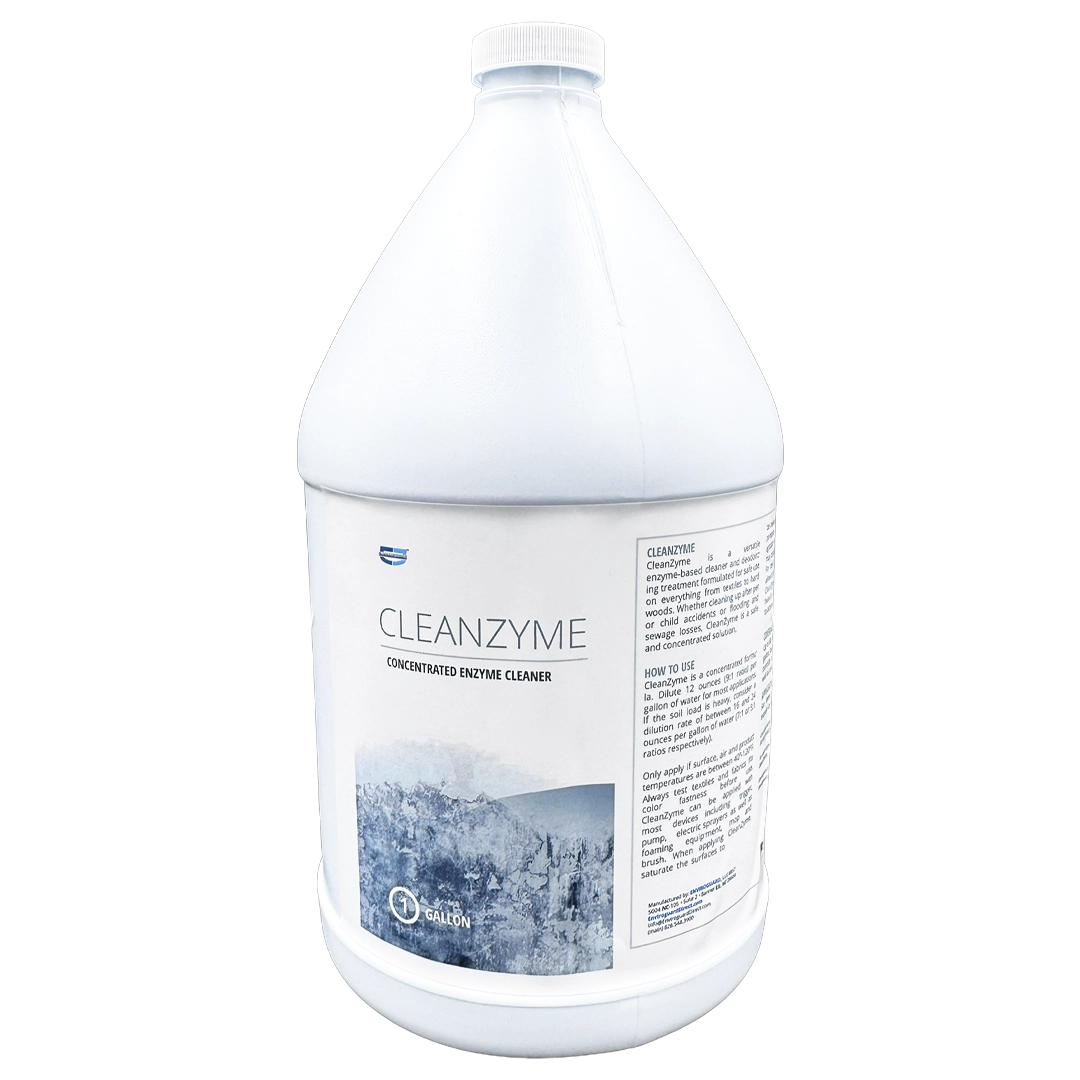
The first step targets odor-causing compounds at their source, embedded within the substrate matrix as deposits of uric acid, protein residues, bacterial byproducts, and fecal organic matter. CleanZyme provides a concentrated enzymatic formula designed to penetrate porous materials and initiate breakdown at the molecular level.
The formulation includes multiple types of enzymes, such as lipases and proteases, which work synergistically to break down fats and protein-based organic components commonly found in urine and fecal matter. This enables the treatment to address a broad spectrum of contaminants simultaneously, reducing complex odor-causing compounds into simpler, non-odorous substances.
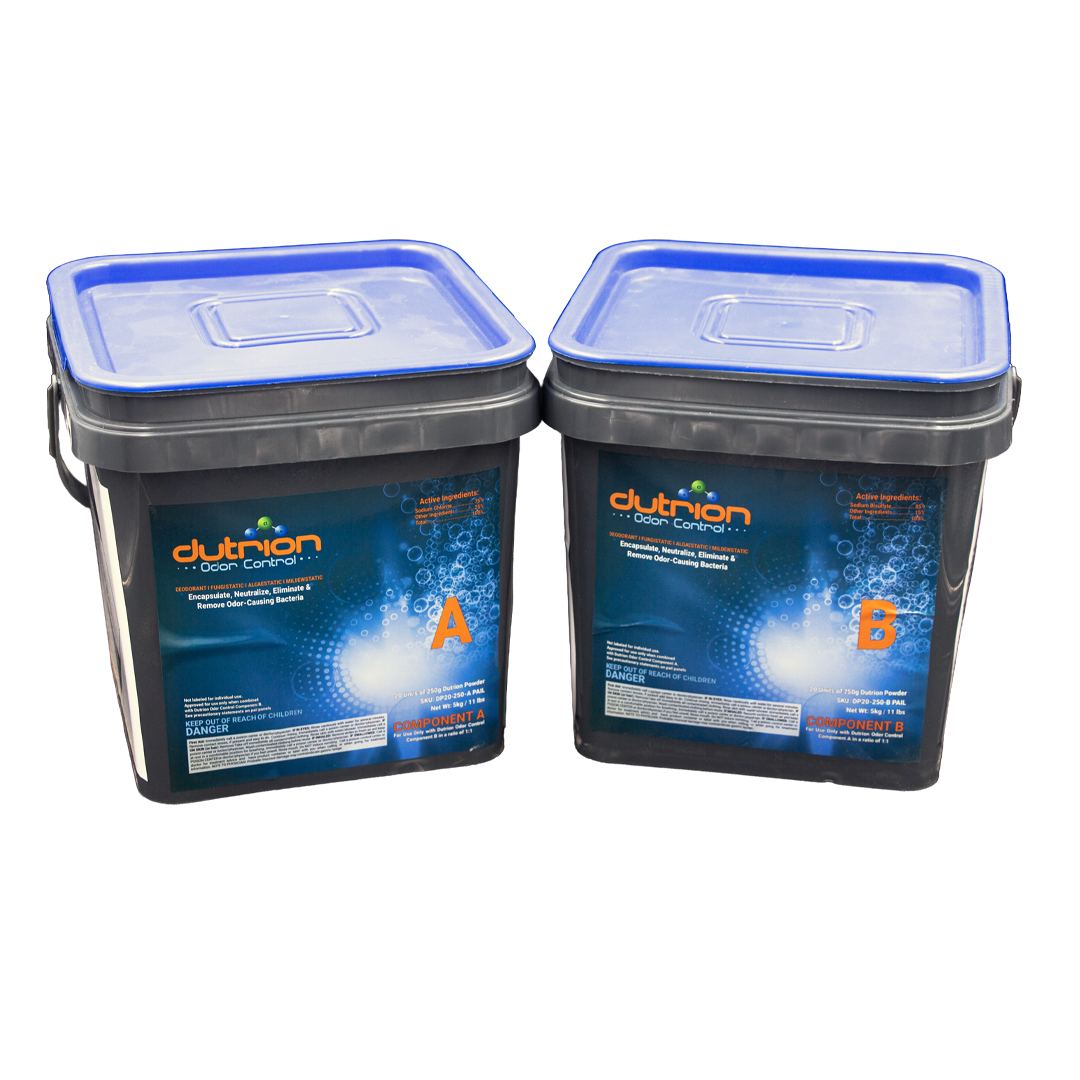
After enzymatic treatment, the remaining odor compounds are neutralized with Dutrion. Chlorine dioxide oxidizes and breaks down odor-causing molecules at the chemical bond level.
Enzymes convert uric acid precursors, urea, proteins, and lipids into odorless byproducts, eliminating the source rather than masking it.
Application must match the depth of contamination. In carpets, this requires full saturation and sufficient dwell time. Keeping the area covered prevents premature drying and ensures complete breakdown.

In cases of deep contamination, especially in materials such as concrete, OSB, or masonry, some compounds may remain beyond the reach of enzymatic and oxidative treatment. Over time, changes in temperature and humidity can cause these residues to off gas, leading to the return of odors.
VaporLock is used as the final step to prevent this. It forms a vapor impermeable barrier over the treated surface, sealing any remaining compounds and preventing them from being released back into the air. In this way, the odor emission pathway is effectively blocked.
The first step targets odor causing compounds at their source, embedded within the substrate matrix as deposits of uric acid, protein residues, bacterial byproducts, and fecal organic matter. CleanZyme provides a concentrated enzymatic formula designed to penetrate porous materials and initiate breakdown at the molecular level.
The formulation includes multiple types of enzymes, such as lipases and proteases, which work synergistically to break down fats and protein based organic components commonly found in urine and fecal matter. This allows the treatment to address a broad range of contaminants simultaneously, reducing complex odor causing compounds into simpler, non odorous substances.

After enzymatic treatment, the remaining odor compounds are neutralized with Dutrion. Chlorine dioxide oxidizes and breaks down odor causing molecules at the chemical bond level.
Enzymes convert uric acid precursors, urea, proteins, and lipids into odorless byproducts, eliminating the source rather than masking it.
Application must match the depth of contamination. In carpets, this requires full saturation and adequate dwell time. Keeping the area covered prevents premature drying and ensures complete breakdown.
In cases of deep contamination, especially in materials such as concrete, OSB, or masonry, some compounds may remain beyond the reach of enzymatic and oxidative treatment. Over time, changes in temperature and humidity can cause these residues to off gas, leading to the return of odors.
VaporLock is used as the final step to prevent this. It forms a vapor impermeable barrier over the treated surface, sealing any remaining compounds and preventing them from being released back into the air. In this way, the odor emission pathway is effectively blocked.
The Takeaway
Pet odors are a chemistry problem before they are a cleaning problem. Uric acid crystals do not respond to soap and water. Ammonia derivatives do not respond to fragrance. Bacterial decomposition does not stop because a surface has been wiped. The compounds that cause pet odor are biologically designed to persist, and any remediation approach that does not account for that will fall short on a long enough timeline.
The correct approach is one grounded in odor chemistry: enzymatic breakdown of organic source compounds, oxidative neutralization of residual molecular contaminants, and barrier control of any remaining deep-substrate off-gassing. This is not a more aggressive version of conventional cleaning, but a categorically different process that treats the contamination at the level where the odor originates rather than at the surface where it is detected.
The result is not reduced odor or temporarily suppressed odor. It is a home where the compounds responsible for pet odor no longer exist in any active form. That is the standard professional remediation should be held to, and it is exactly what a properly executed three-step system achieves. Because our pets deserve a clean home just as much as we do.
Get the product stack, the OSI training, Assessment Guide, and the SOP your crews need to stop eating callbacks on fire loss work — plus placement in our Find-a-Pro directory.
Subscribe to our marketing updates to stay informed on training, events, and new products.