April's newsletter is out! ✉️

Technical Guide  •  Odor Series

The Smell That Stayed for Dinner

Cooking Odors and What It Takes to Eliminate Them

Cooking odors are beloved in the moment and infuriating a week later. Here’s why they embed into building materials at the molecular level, and what it actually takes to eliminate them.

May 18th, 20268 min readOdor Series

Sound Familiar?

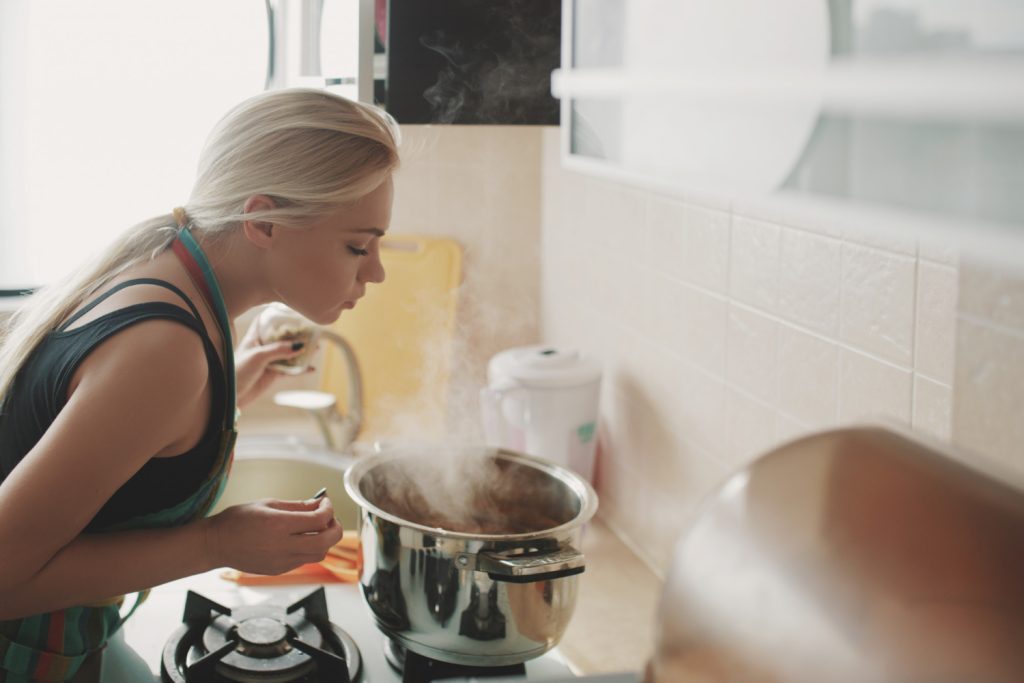
Picture this: it's a Sunday afternoon and someone in the household has decided to go all out. Garlic hits the hot pan, cumin and turmeric get thrown into the mix, and soon, the whole space smells like the best restaurant you've ever been to. The straggling household members wander into the kitchen, the meal is fantastic, and everyone walks away full and happy. Fast forward four days. The food is long gone, but the dense, greasy, lingering ghost of Sunday's dish remains, hanging in the air, soaked into the curtains, settled into the ceiling tiles, and quietly embedded into everything porous within thirty feet of the stove. What was once inviting on Sunday has now lingered like a poor house guest. If you work in remediation, real estate, or property management, you know this scenario very well. Except the version you are walking into is usually four years old, not four days. And this situation isn't exclusive to just single households. A rental unit where the previous tenant cooked nearly every day for a decade. A commercial kitchen with inadequate ventilation. A foreclosed property where the kitchen absorbed years of frying, boiling, and grilling with no exhaust system to speak of. Cooking odors that have had time to fully penetrate a structure are a legitimate remediation challenge, not something a coat of paint and a good candle will fix. Here is why...

Cooking odor is a chemistry problem. The pleasant smells produced during cooking are, at the molecular level, a complex mix of volatile organic compounds generated by heat-driven chemical reactions. Many of these compounds are lipophilic (they bind readily to fats) and they absorb into every porous surface in a room. Understanding what you are dealing with at the molecular level is the first step toward eliminating it permanently.

The Science of Smell

Cooking Odors Molecular Levels 101

Cooking odors are not a single compound. They are a dynamic mixture of hundreds of volatile organic compounds generated through three primary chemical reaction pathways: the Maillard reaction, lipid oxidation and hydrolysis, and volatile sulfur compound release from alliums and cruciferous vegetables. Each pathway contributes distinct compound classes with distinct physical properties that govern how deeply they penetrate building materials and how resistant they are to removal.

The combination of these reaction pathways in a single cooking event means that a kitchen produces a complex, layered odor load with compounds that range from highly water-soluble to strongly lipophilic, from rapidly volatilizing to persistently embedded. This chemical diversity is precisely what makes cooking odor difficult to treat with any single-mechanism approach.

The Maillard Reaction: Flavor You Can Smell from the Next Room

The Maillard reaction is the non-enzymatic browning reaction that occurs between amino acids and reducing sugars when food is exposed to heat above approximately 140 to 165°C (280 to 330°F). It is responsible for the golden crust on bread, the sear on a steak, the caramelization on roasted vegetables. It is also responsible for generating a dense cloud of volatile organic compounds that immediately begin seeking surfaces to absorb into.

The reaction produces pyrazines, furans, thiophenes, aldehydes, and heterocyclic amines in combination. Pyrazines carry that characteristic roasted, nutty character. Furans contribute caramel and sweet notes. Aldehydes, particularly short-chain species like hexanal and nonanal, carry rancid and fatty odor signatures. These compounds are small, volatile, and highly lipophilic, meaning they migrate rapidly through air and bind tightly to any fatty residue or porous surface they contact.

In an enclosed kitchen, every Maillard event contributes to a cumulative loading of these compounds into drywall, ceiling tiles, cabinet surfaces, grout lines, upholstery, and HVAC components. Over time, that loading becomes the odor source itself, no longer actively cooking, but continuously off-gassing from embedded residue.

Lipid Oxidation

Aldehydes & Acrolein

Cooking oils heated above their smoke point undergo thermal oxidation and hydrolysis, releasing short- and medium-chain aldehydes including hexanal, nonanal, and decanal, as well as acrolein, a sharp, highly irritating aldehyde produced from glycerol decomposition. These compounds are potent odor contributors even at trace concentrations and absorb readily into porous building materials.

Sulfur Chemistry

Allicin & Volatile Sulfides

Cooking alliums (garlic, onions, leeks) and cruciferous vegetables releases volatile sulfur compounds including allicin, diallyl disulfide, and hydrogen sulfide. These compounds are detectable by the human nose at concentrations as low as parts per billion and are chemically persistent in porous materials. Sulfur compounds are among the most challenging to neutralize through ventilation or surface cleaning alone.

Protein Pyrolysis

Heterocyclic Amines

High-heat cooking of proteins, particularly at the char or sear, generates heterocyclic aromatic amines through pyrolysis of amino acids. These compounds produce the distinctive smell of grilled and charred foods and have strong sorption affinity for both lipid films and porous building substrates, making them difficult to remove once embedded at depth.

Grease Aerosol

Particulate & Lipid Films

Cooking generates visible and invisible aerosol particulate: fine grease droplets and combustion particles that deposit as thin films on all horizontal and vertical surfaces within range. These lipid films serve as both odor sources themselves and as sorption matrices for other volatile compounds. A grease film on a drywall surface is essentially a continuous delivery mechanism for re-emission of cooking VOCs into the room air.

The Persistence Problem

Why Don’t They Just Disappear?

The reason cooking odors persist long after the cooking event has ended is not mysterious once you understand the chemistry. Volatile organic compounds generated during cooking do not simply dissipate into the air and vanish. They partition between the gas phase and the solid phase according to their physical properties, and for most cooking VOCs, particularly the lipophilic ones, the solid phase is strongly preferred. Every porous surface in an affected kitchen acts as a sink, continuously drawing in volatile compounds from the air and storing them in the substrate matrix.

300+

Volatile Compounds

Distinct VOCs generated during a single cooking session involving browning, frying, or searing reactions

ppb

Detection Threshold

Olfactory detection threshold for sulfur compounds from cooking, far below what surface cleaning meaningfully reduces

Years

Embedded Off-gassing

Duration cooking VOCs can re-emit from drywall, ceiling tile, and HVAC insulation in high-exposure kitchens with no remediation

The mechanism responsible for this behavior is called sorption: the process by which volatile molecules are taken up and retained by solid materials. Building materials vary considerably in their sorption capacity, but all porous materials exhibit it to some degree. Drywall gypsum and paper facing, wood composite cabinet substrates, ceiling tile mineral fiber, grout and tile adhesives, and painted surfaces all accumulate cooking VOCs through sorption over time.

The rate of accumulation depends on exposure intensity and frequency. In a residential kitchen with daily cooking over several years, the VOC loading in drywall surfaces directly adjacent to the stove can reach concentrations sufficient to produce detectable odor for months to years after the last cooking event, even with the kitchen sitting empty and unheated. In a commercial kitchen environment, the loading compounds further still.

Why Painting Over It Does Not Work

Applying a fresh coat of paint to walls in a cooking odor-affected kitchen is one of the most commonly attempted and reliably unsuccessful approaches in the field. Here is the chemistry of why: standard interior latex paint is permeable to the VOCs embedded below the surface. The paint film has no meaningful barrier function against small molecular weight aldehydes, volatile sulfides, or lipid oxidation products already in the drywall substrate. Within days to weeks, the VOCs migrate back through the paint layer and the odor returns as strong as before the work was done.

Oil-based paints and shellac-based primers reduce this re-emission rate but do not stop it. They slow the off-gassing cycle rather than ending it. The only approaches that actually terminate re-emission are those that either eliminate the source compounds through chemical neutralization or create a true vapor-impermeable encapsulant barrier at the substrate surface. Neither of those outcomes is achievable with standard painting products.

The materials most problematic from a cooking odor remediation standpoint are unpainted drywall, gypsum board with damaged paper facing, bare wood cabinet interiors, ceiling tiles above cooking surfaces, HVAC duct liner insulation, and grout in high-splatter zones. These materials have the highest sorption capacity and the greatest depth of VOC penetration in long-exposure kitchens. Any protocol that does not specifically address these substrate categories will produce incomplete results.

Common Failure Points

Why Cooking Odors Keep Coming Back After Treatment

The majority of cooking odor remediation failures in the field are not caused by ineffective products. They are caused by incomplete scope. Understanding the five most common failure patterns helps explain why treatments that initially appear successful frequently produce callbacks within weeks of completion.

  • Treating only the kitchen. Cooking VOCs travel. Grease aerosol and volatile compounds follow air movement throughout an entire floor plan, depositing in living areas, hallways, bedrooms, and HVAC systems far from the stove. Limiting treatment to the kitchen surface area leaves the majority of the accumulated load untreated. Odor re-emission from adjacent spaces will make the kitchen treatment appear to fail within weeks.
  • Missing the HVAC system. Return air ducts, supply registers, filter housing, and duct liner insulation accumulate years of cooking VOC loading in kitchens without dedicated exhaust ventilation. Every time the HVAC operates, it redistributes embedded odor compounds throughout the space. No surface treatment in the kitchen will eliminate odors originating in the duct system.
  • Surface cleaning without addressing embedded compounds. Degreasing the visible surface of cabinets and walls removes the grease film at the surface but does nothing to address the VOC loading in the substrate below. The majority of the odor-generating material resides beneath the painted surface, in the drywall paper, in the wood substrate of cabinets, and in grout pores. Surface-only treatment produces a clean-looking result that fails on odor within weeks.
  • Fragrance-based masking without neutralization. Fragrance deodorizers do not alter cooking VOC chemistry. They introduce competing odorants that temporarily overpower the cooking odor signature. As the masking agent dissipates, the cooking compounds, which have not been changed at all, re-emerge at full strength. This outcome is consistent and predictable, and it is why masking-based approaches to cooking odor should not be proposed as remediation solutions.
  • Skipping encapsulation on high-load substrates. In properties with years of accumulated cooking exposure, the VOC loading in drywall and other porous substrates may exceed what oxidative treatments can fully neutralize in a single application. Skipping VaporLock on heavy-exposure substrates leaves a re-emission pathway open. The oxidative step reduces the concentration of active odor compounds; the encapsulant step closes the pathway through which residual trace compounds would continue to off-gas.
Professional Protocol

The Odor Removal System: Clean, Deodorize, Control

A professional cooking odor remediation protocol requires three sequential interventions that address the problem at each phase of the odor cycle: breaking down the organic residue that fuels continued off-gassing, oxidatively neutralizing the volatile compounds distributed throughout the space, and creating a physical barrier that prevents residual embedded compounds from re-emitting. Each step addresses a distinct mechanism. No single step alone produces a durable result.

Three-Step Cooking Odor Remediation System

Break down the residue. Neutralize the compounds. Lock out re-emission.

Step 1: Clean

Organic Breakdown

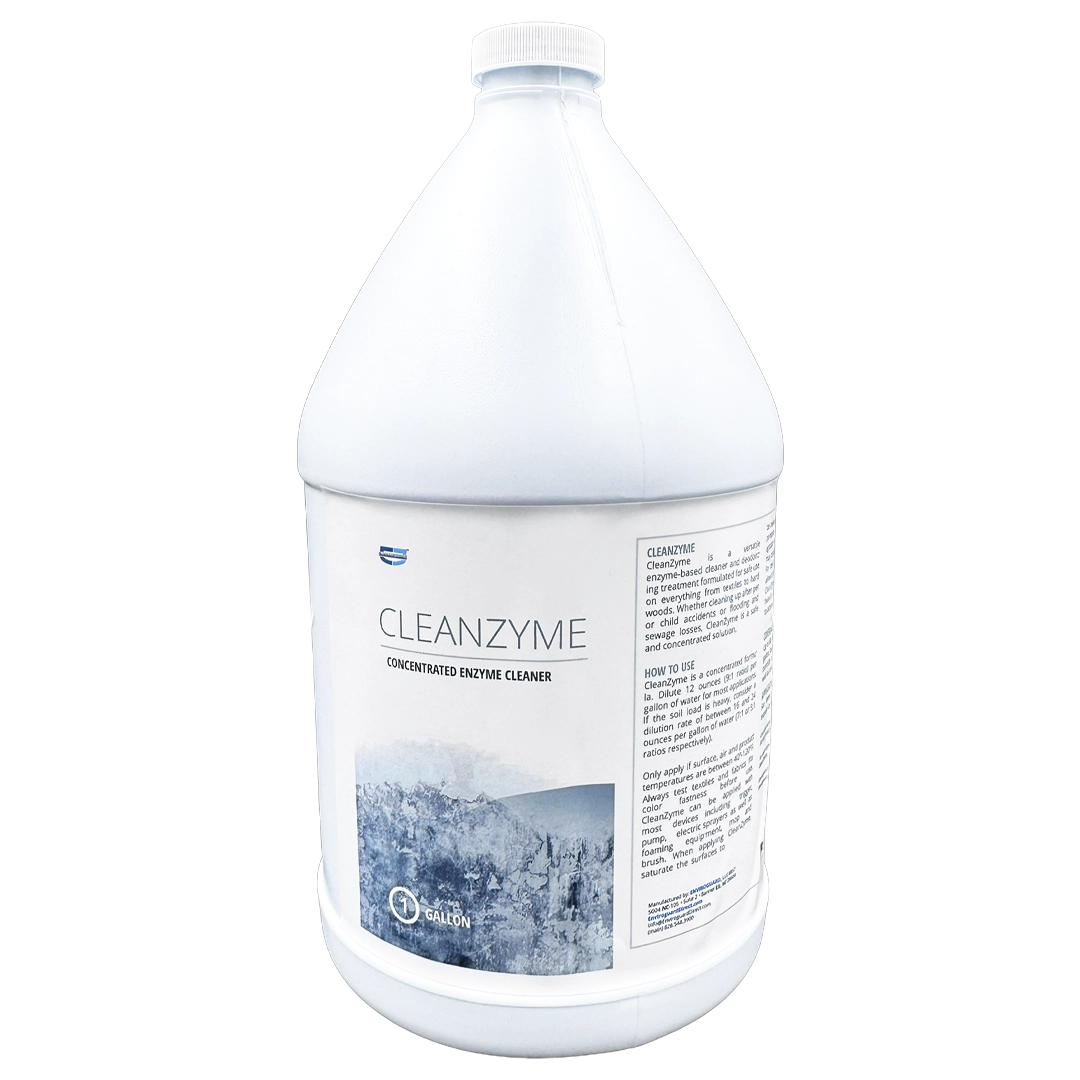
Clean Zyme

Step 2: Deodorize

VOC Neutralization

Dutrion Wet & Dry

Step 3: Control

Re-emission Barrier

VaporLock

1

Clean: Enzymatic Breakdown of Grease, Lipids, and Organic Odor Residue

Clean Zyme
Clean Zyme

The first step targets the organic substrate that fuels continued odor re-emission: the grease films, lipid deposits, and proteinaceous residue embedded in cabinet surfaces, drywall, grout, and other porous materials throughout the affected space. Clean Zyme delivers a concentrated enzymatic formula that penetrates into these materials and initiates molecular-level breakdown of the odor-generating organic compounds.

Lipase enzymes attack the fatty acid esters and triglycerides that form grease films, breaking them into simpler fatty acids and glycerol that carry minimal odor signatures. Protease enzymes disassemble proteinaceous residue from food aerosols, eliminating the substrate that supports continued bacterial decomposition and associated odor generation. Amylase enzymes target starch-based residues that accumulate in high-use kitchen environments.

Because cooking odor loading is distributed across a wide surface area, Clean Zyme must be applied throughout the entire affected zone, not limited to visible grease deposits. Allow adequate dwell time for enzymatic activity to penetrate the substrate surface and complete the breakdown cycle before proceeding to step two.

Shop Clean Zyme ›
2

Deodorize: Oxidative Neutralization of Cooking VOCs Throughout the Affected Space

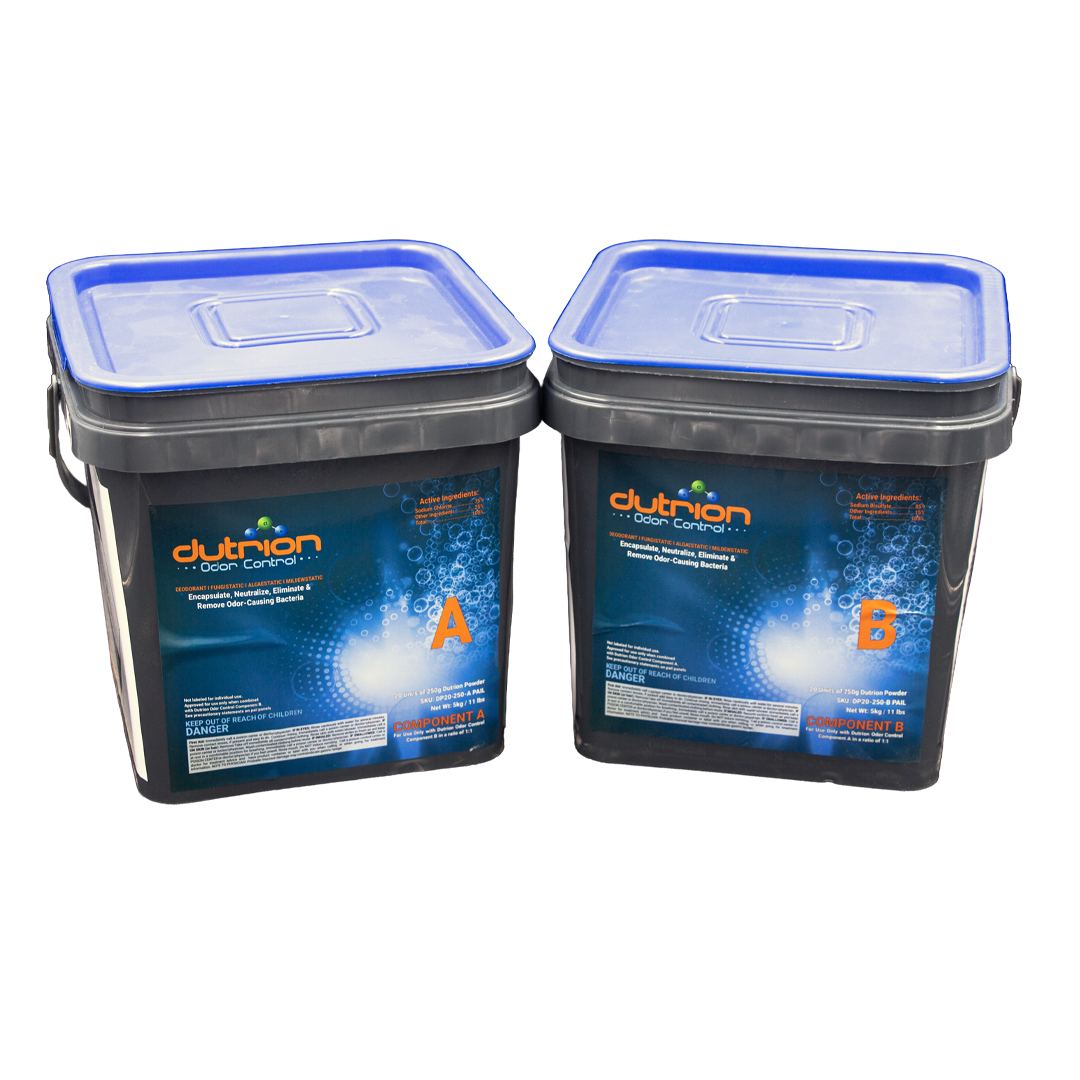
Dutrion Wet & Dry
Dutrion

Once the organic residue driving active off-gassing has been broken down by the enzymatic step, the second phase addresses the volatile organic compounds already distributed throughout the space: in the air column, in surface sorption zones, in ductwork, and in areas inaccessible to direct surface application. Dutrion delivers chlorine dioxide (ClO2), a highly effective oxidative agent with unique properties that make it particularly well-suited to cooking odor neutralization at scale.

Chlorine dioxide functions through selective oxidation: it reacts with the aldehyde, sulfide, and amine functional groups that characterize cooking VOCs, breaking the molecular bonds responsible for their odor signatures and converting them to non-odorous oxidized products. Unlike ozone, ClO2 does not produce secondary reaction products that themselves carry objectionable odors. Unlike hypochlorite-based treatments, it does not generate chlorinated byproducts from reactions with organic material.

Dutrion is available in wet (liquid) and dry (gas-generating) formulations. The liquid formulation is applied by spray or fogging to treat surface-sorbed compounds directly. The gas-phase formulation generates ClO2 that penetrates into air spaces, duct interiors, wall cavities, and any enclosed zone where liquid application is not practical. In kitchen environments with compromised or nonexistent exhaust ventilation, gas-phase treatment of the HVAC system is a critical component of a complete protocol.

The combined wet and dry application ensures that the full VOC load, regardless of its physical distribution across surface and air phases, is contacted by the oxidizing agent and chemically neutralized rather than masked or temporarily displaced.

Shop Dutrion ›
3

Control: Vapor-Impermeable Encapsulation to Prevent Re-emission from Deep Substrates

VaporLock
VaporLock

The third step addresses a fundamental limitation of any chemical neutralization approach in heavily loaded substrates: not every VOC molecule embedded deep within drywall, ceiling tile, or cabinet substrate material will be reached and neutralized by surface application or gas-phase treatment in a single pass. In kitchens with years or decades of accumulated exposure, residual trace-level compounds remain in the substrate below the treated zone. Without a physical barrier, these compounds will continue to off-gas slowly into the occupied space over months and years, producing persistent low-level odor that undermines the remediation result.

VaporLock is a vapor-impermeable encapsulant coating formulated specifically to create a true molecular barrier at the substrate surface. Unlike standard paints and primers, VaporLock has extremely low vapor permeability for the VOC classes associated with cooking odor. Applied to treated wall and ceiling surfaces, it physically blocks the diffusion pathway through which residual deep-substrate compounds would otherwise migrate back to the room air.

VaporLock is applied after the enzymatic and oxidative steps have completed and the treated surfaces have dried. It cures to a clear or paintable finish that accepts standard interior finish coatings, allowing the property to be returned to normal finish condition without any visible evidence of the remediation treatment. On high-exposure substrates such as drywall directly adjacent to cooking surfaces, ceiling tiles, and the interior faces of base and wall cabinets, VaporLock application is not optional: it is the step that converts a treatment that reduces odor into one that eliminates it durably.

The encapsulant barrier works synergistically with the preceding chemical steps. The enzymatic treatment reduces the total organic load available to drive off-gassing. The oxidative treatment neutralizes the active volatile compounds in surface sorption zones and air spaces. VaporLock then seals any remaining embedded material below the treated surface, completing a three-layer defense against odor return that no single-step approach can replicate.

Shop VaporLock ›

The Takeaway

Cooking Odors Are Chemistry, Not Just Smell

Cooking odors that have embedded into a structure over months or years are not a cleaning problem. They are a chemistry problem. The volatile organic compounds responsible (Maillard reaction products, lipid oxidation aldehydes, volatile sulfur species) are distributed throughout the entire material load of the affected space. They are not at the surface. They are in the substrate, and they will continue re-emitting from that substrate indefinitely unless the source compounds are eliminated at the molecular level and the re-emission pathway is physically closed.

A fragrance will cover it for a day. A coat of paint will slow it for a week. Neither of those outcomes meets a professional remediation standard. The correct approach is one grounded in chemistry: enzymatic breakdown of the organic residue driving continued off-gassing, oxidative neutralization of the volatile compounds distributed across the space and its HVAC system, and encapsulant barrier control of any remaining embedded material that lies below the reach of those two steps.

That is the standard a properly executed three-step system delivers. Because the food was great. The smell that came with it needs to stay in the past where it belongs.

Become an Enviroguard Certified Firm

Get the product stack, the OSI training, Assessment Guide, and the SOP your crews need to stop eating callbacks on fire loss work plus placement in our Find a Pro directory.

Apply to Become a Certified Firm
Share the Post:

Want to stay in the loop?

Subscribe to our marketing updates to stay informed on training, events, and new products.

Name(Required)
Email(Required)
Privacy(Required)