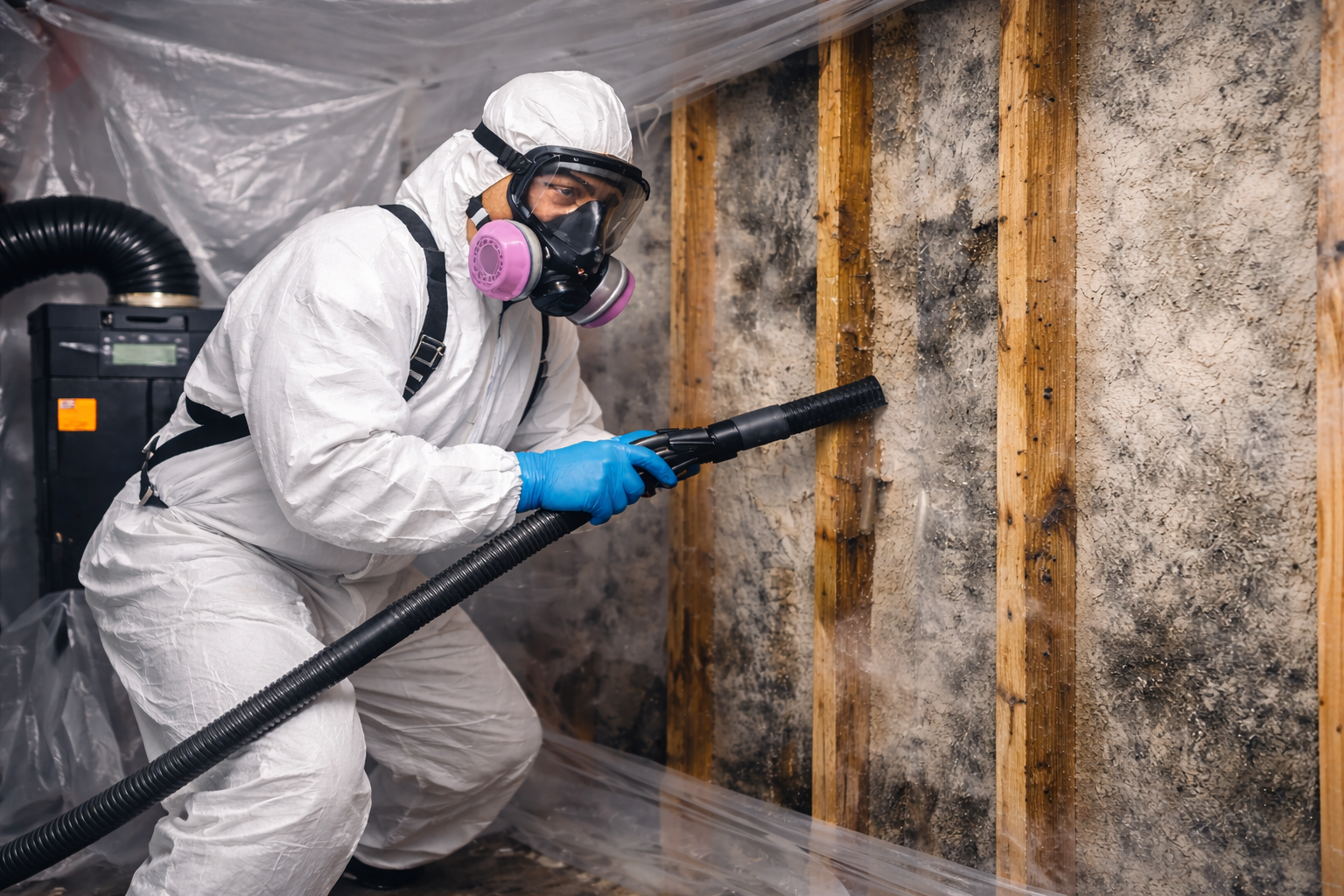
Remediation vs Restoration: What Is the Difference and Why It Matters
When something goes wrong in


We’re asked frequently how AMRT and Enviroguard Certification compare, so let’s walk through the primary topics trained on in the Applied Microbial Remediation Technician (referencing IICRC S-520) and Enviroguard technician and professional courses. why they’re both necessary for a well-rounded and complete approach to quality, sales, profitability and customer satisfaction.

AMRT:
The theoretical principles, guidelines/procedures, importance, and physical tools for performing mold remediation services
Certified Firm
The direct application of principles, using the specificity of Mold Severity Indexing including hands-on assessment tools (equipment and documentation), step-by-step customer education, passive/active moisture controls, chemicals/equipment/procedures for cleaning, and how they translate into known costs, profitability, and customer satisfaction.
AMRT
General information and ideas of how, when and why to use chemicals as remediation tools
Certified Firm
Specific, hands-on safety compatibility, equipment select / use, and chemical selection / use with step-by-step procedures based upon Mold Severity Indexing and the 5 types of moisture to address clean-up through recurrence prevention while assuring quality to meet post remediation verification
AMRT
A general understanding of building science and materials science (thermodynamics, moisture types, material properties) for application to assessment through recurrence prevention
Certified Firm
A specific understanding of how the 5 types of moisture are identified and documented for the purposes of practical resolution as well as customer education, and how specific active and passive moisture controls are tied directly to recurrence prevention plus the benefit of annual inspection for the purposes of maintaining Condition 1 environments throughout the building
AMRT
General step-by-step guidelines for remediating the structure, HVAC and contents following the Principles of Remediation
Certified Firm
Specific procedures tied to Mold Severity Indexing that meet the needs of quality control for post-remediation verification through profit planning while also acting in the best interest of customer education, understanding and job completion expectations
AMRT
General guidelines on how to ensure safety on the job in regard to ingress and egress through job-related exposures to mold
Certified Firm
Specific guidelines that define the three types of exposures and that overlap job type and chemical type compatibilities for the assurance of eye, skin and respiratory safety
AMRT
An understanding of necessary operational and legal documentation for the successful management of jobs and the potential need to mitigate liability
Certified Firm
The process, documentation and tools that binds everything together from the time a customer requests an inspection through the assurance of their satisfaction culminating in a customer advocacy
AMRT
Occupant backgrounds and habits, property history, customer concerns, property condition, problem sources, health/safety determinations, inaccessible spaces, contamination, structural damage and conclusions from the building inspection identifying all known and suspected sources of moisture, and subsequent work plans related to service recommendations, procedures, service scheduling and cost estimate
Certified Firm
Defines the information that passes from assessment and sales to management and production to ensure specificity and adherence to job site safety, efficiency, efficacy, profitability while providing metrics and transparency for customer confidence and peace-of-mind
Other topics are covered in the AMRT course like limitations, complexities, complications and conflicts (LCCC) as well as post-remediation verification and indoor environmental professional. In the end, we believe that courses like AMRT provide a firm foundation for a successful mold remediation business while certification with Enviroguard provides the specificity to ensure a duplicatable approach that considers the correct order and details of information gathering, assessment, documentation, and customer education so that quality control, cost control, profitability and customer satisfaction are met.
When something goes wrong in